The Unwanted Tenants: A Lifetime of Negotiating My Boobs
Decades of dysphoria, discomfort, and defiance — one woman’s lifelong negotiation with her unwanted body.

Let us discuss something, which for decades has lived rent-free in my mind and has stared squarely in my face: It is not a love story, but it is an adult relationship. More like…an uneasy cohabitation. With my boobs. These big, blatantly assertive occupants. The pesky buggers never allowed me peace in my life. To tell the truth, there were so many times I wished they’d just pack their things and leave.
Before I ever imagined anything, I was a kid-shaped wire model-anxorous all elbows and knees. Womanhood was something imposed. At a level very deep in my bones, I wanted nothing to do with children. Thus, when the elderly, period talk nodded from one friend to another, it felt like one more meaningless biological betrayal was closing in on me.
I had a secret, shameful hope: somehow, I thought that maybe something was wrong with me. Maybe I would be spared. And then, the very first tender buds began to show. With no help from the internet and a cruel lack of comprehensive sex-ed, my tender little mind dived straight into the basement of all thought: cancer. This cannot be normal. This hurts. This is wrong.
Denial became my armour. As they grew, stubbornly and undeniably, I refused the whispers. “You need a bra, dear,” an aunt would murmur. I’d shrug, pulling my cropped vest — flimsy cotton, utterly unsupportive — tighter, as if that could make them disappear.
There I lived, trying on these vests, futilely battling to pretend all was as it used to be. The world noticed, of course: young men would first stare and then utter crude or simply curious remarks like blows crashing against me. “Nice pillows,” someone sniggered in the corridor. The wave of heat steeped into my cheeks. I hunched my shoulders and scurried away, willing them to disappear behind oversized sweaters or big loose t-shirts. Shame, thick and cloying, wanted to hang around with me. I felt that my body had become an unwarranted spectacle.
Remember The Wizard of Oz? My absolute sanctuary as a child. Judy Garland, sparkling on that yellow brick road. My mother, trying perhaps to connect or offer some trivial factoid, mentioned how they’d bound Judy’s boobs for the role, to hide her developing figure and maintain Dorothy’s youthful illusion.
In a moment of despair and optimism, I suddenly thought of something confusing but quite possible to be true, which was Binding. WouldThat be something I could do? Could I go back to being a normal kid, shrink myself and make them get lost somehow? However, in general, it was still the 1980s and 1990s. There were no YouTube channels or online forums where people could freely divulge their compression trade secrets. I was there alone in my room, in a suffocating fight with my stolen bandages from the bathroom cabinet which I tried to wrap tightly around me. I had only succeeded in making me more uneasy and angry. The daydream remained like that.
At sixteen, the denial finally cracked. My mother, exasperated by my baggy clothes and obvious discomfort, practically dragged me to Caldwell’s, the imposing local department store. The lingerie section felt like a tribunal. The fitter, brisk and efficient, measured me. Her pronouncement landed like a sentence: “DD.” Double D.
The letters echoed in the stifling cubicle. I didn’t feel like some voluptuous goddess. I felt monstrous. Alien. A wave of hot, humiliated tears welled up and spilled over. My mother, flustered, tried to console me with the script society had handed her: “Oh, sweetheart, don’t cry! Men love big boobs!” Her words scraped raw against a truth I hadn’t yet voiced, even to myself: I wasn’t really into men. Her reassurance felt like confirmation of a burden I didn’t want to carry.
And the attention… God, the attention. From men. It wasn’t admiration; it felt like being assessed, objectified, reduced to a single physical attribute. Leers on the street, muttered comments, invasive stares — it made me feel perpetually dirty, exposed.
I was now very skillful at concealment. Would you cover them all? Alright, but then I seemed like a lump, an amorphous bag. Would you prove so much in a v-neck with a bit of your cleavage? That seemed to be an invitation. One that is carved. There was no possibility of success. I never felt that I was essentially compatible with my skin, be it what I was wearing. I was not aware of the dysphoria then but, it still existed and it dominated all the spheres of my life. In one of the parts that I was required to play, I felt that my body was the wrong costume.
Worse were the violations. The casual, brazen way men felt entitled to touch. A crowded bus, a bustling bar, a concert — hands would dart out, copping a feel. It was swift, shocking, degrading.
The unspoken justification seemed to hang in the air: They’re big. They’re obvious. They’re practically public property. You can’t hide them, so why not? Each touch wasn’t just physical; it was a theft of my autonomy, a reinforcement of my shame. Meanwhile, the world bombarded me with images: perky boobs, defying gravity, standing proudly unsupported in flimsy bralettes, no matter their size. Magazine covers, movies, advertisements — they sold a lie.
My reality? Gravity won. Early. Even at sixteen, they hung. They moved. They sagged. Not in an ‘earth mother’ way, but in a way that made me feel prematurely old, frumpy, matronly. While my peers flaunted their cute, manageable A-cups in trendy tops, I felt anchored to the ground by mine, shrouded in oversized flannel.
For years, I tried to fit the box labeled “Woman.” It chafed. “Lady” felt like a costume. In my forties, a seismic shift: an autism diagnosis. It wasn’t just about sensory sensitivities or social navigation; it was the key to understanding a deeper dissonance. The arbitrary rules of gender, the expectations piled onto “womanhood” — they felt like ill-fitting clothes, scratchy and constricting.
The diagnosis gave me permission to finally shrug them off. I came out as non-binary. Female, mostly, but not entirely. Not defined by the societal script. And certainly not defined by them.
My boobs, however, remained. Uninvited tenants complicating everything. Finding clothes that fit me, not just accommodate them, is a constant battle. Button-down shirts? Forget it. Unless it’s a men’s shirt, cut straighter, the fabric gapes obscenely between the buttons over my front. The judgement feels relentless. Buttoned up high? Prudish, uptight. A lower neckline? Slutty, asking for it.
My body, it seems, is a public Rorschach test for strangers’ assumptions. Am I stupid because I have big boobs? Am I inherently available? The mental gymnastics are exhausting.
Then there are the stark reminders. Bra shopping — a special kind of hell. Wrestling with straps, underwires digging in, the fluorescent lights highlighting every bulge, the overwhelming sensory assault of fabrics and fittings. Mammograms. Cold metal plates compressing tissue I never wanted, a clinical intrusion into a deeply personal alienation. Each event drags me back to that pre-pubescent longing for flatness. With my periods, I found agency.
Hormonal contraceptives silenced that particular monthly betrayal. But my boobs? They remained, stubbornly protruding, a constant, awkward presence that felt… separate. Like luggage I was forced to carry.
Intimacy offered a strange, fleeting truce. When touched consensually, during sex, it could feel nice. Pleasant. But even then, they were… greedy. Attention magnets. They’d draw focus away from places that truly sang for me — my neck, for instance, a landscape of exquisite sensitivity. Just a whisper there could send shivers through my entire being. My boobs?
They’d elbow their way into the spotlight, diverting sensation, becoming an obstacle rather than a source of deep pleasure. Like noisy neighbours interrupting a beautiful piece of music.
As an autistic person, perimenopause has been less a transition and more an escalating sensory war. The hot flashes aren’t just warm; they’re internal infernos. Night sweats aren’t merely damp; they’re waking nightmares. And the boob sweat? Oh, the boob sweat. That slick, trapped, suffocating sensation under the weight of them.
It wasn’t just uncomfortable; it was an assault. It would jolt me awake, gasping, feeling like I was drowning in my own skin. Even in sleep, there was no ceasefire with these tenants.
My bedtime routine, already an elaborate ritual of managing sensory needs — showering with thick, scentless emollients, slathering anti-itch creams on perpetually dry skin — now required reinforcements. Talcum powder became essential armour, dusted thickly under and between my boobs in a vain attempt to absorb the nightly deluge. Summer was torture. The damp, warm environment beneath became a breeding ground. Fungal infections took hold, the skin red, angry, cracked, sometimes even bleeding. Pain layered onto discomfort, layered onto dysphoria.
Perimenopause has been brutal, no sugar-coating it. But it heralds one mercy: the end of periods. That particular biological function, which served no purpose for me except to deepen my sense of bodily alienation, is finally ceasing.
Would I want a completely flat front now? At this age? It would feel… strange. Unfamiliar territory. But smaller? God, yes. A reduction has been a quiet, persistent dream for as long as I can remember. A fantasy of liberation, of finally feeling proportional, of clothes hanging right, of disappearing into a crowd without this beacon on my front. But surgery terrifies me — the vulnerability, the recovery, the potential complications. And let’s be brutally honest: I’ve never been good at saving money. Life happens. Bills pile up.
That ideal fund is always out of reach. It has never seemed like a practical choice. Put them in a binder? The idea comes back to mind. However, even tight sports bras can cause claustrophobia and panic attacks by making me feel as though I can’t breathe fully. The sensory expense seems excessive.
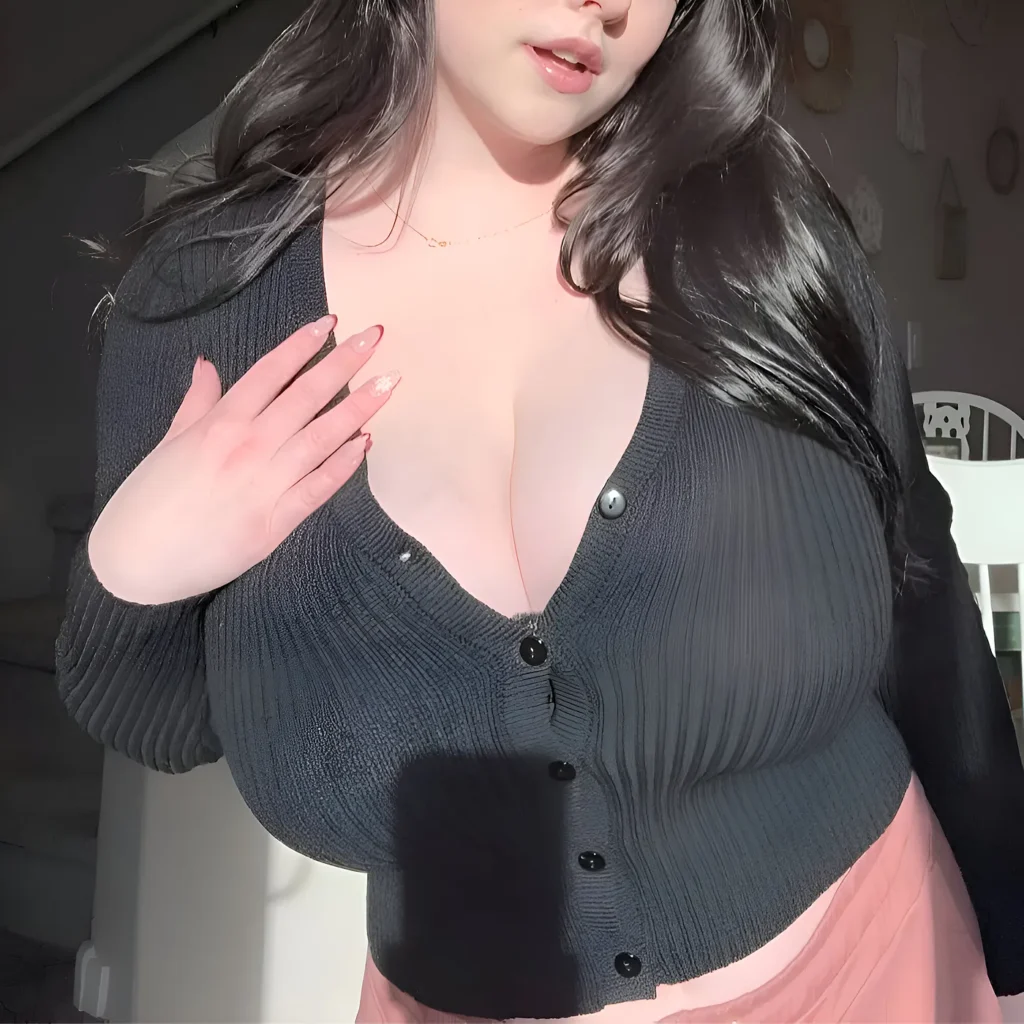
This fraught relationship is woven from many threads. My non-binary identity is a huge part of it — these symbols of a femininity I don’t wholly embrace. But it’s not the whole story. My neurodivergence amplifies every physical discomfort — the weight, the sweat, the constant pressure of fabric. My sensory system screams at the feeling of skin on skin, the dampness, the sheer presence of them. Hot summers turn them into personal saunas strapped to my front.
Then there are the men. Those who continue to gaze, sneer, remark, and touch. The people who seem to think my breasts are there just to please their eyes or their hands. I feel like I should shrink, fold in on myself, and make myself invisible because of their entitlement. to make it simple to conceal these aspects of myself.
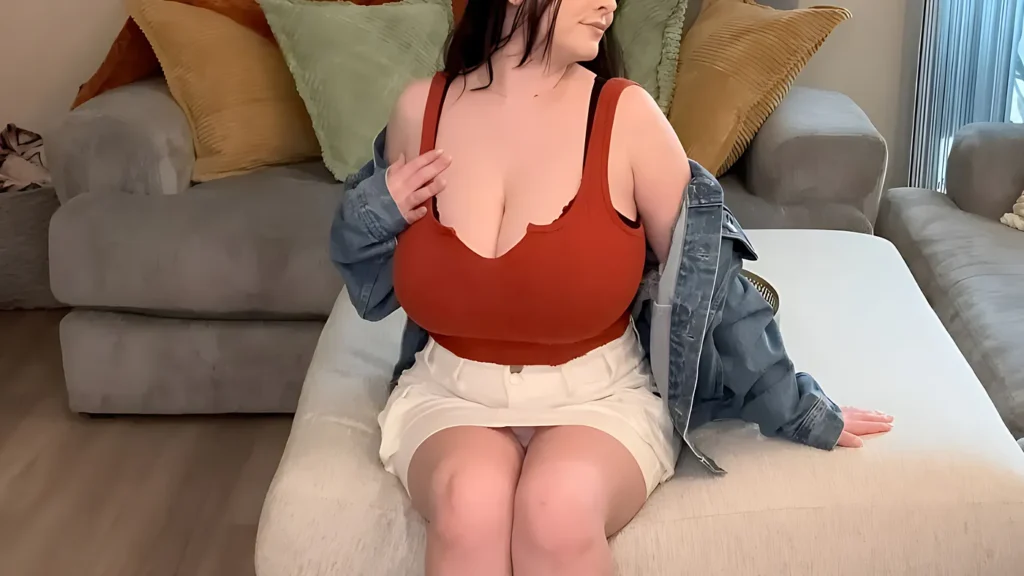
I see the body positivity movement. I truly admire it. Events like the Bosom Banquet, celebrating bodies of all shapes and sizes, radiate a powerful, joyful defiance. I wish I could tap into that. I wish I could look in the mirror and feel acceptance, maybe even pride. But after over forty years of this complex, often painful cohabitation? After decades of shame, discomfort, dysphoria, and violation?
I know, deep in my bones, that kind of radical self-love for this particular part of me isn’t in my cards. The history is too heavy, the sensory reality too constant, the disconnect too profound. No therapist’s couch can erase that lived experience.
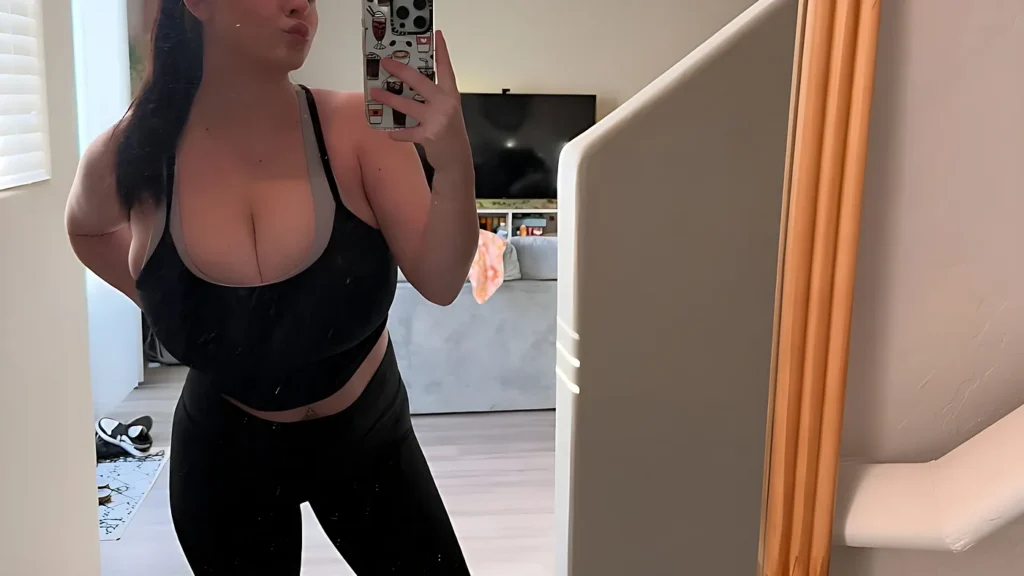
Where does that leave me, then? Negotiations are ongoing. Sometimes I still dream about that reduction. I might finally be lighter at the end of the day. more liberated. More of me. I might improve my ability to save. Perhaps I will find the bravery. Perhaps after my surgery, I’ll stand in front of the mirror and at last feel at ease and like I belong. I made room for myself by finally evicting the undesirable tenants, not because I adhered to some ideal.
The dialogue with my body, especially with these lifelong friends, goes on until then. It’s not simple. It’s disorganised. It’s true. I’m still getting used to living here, too.