









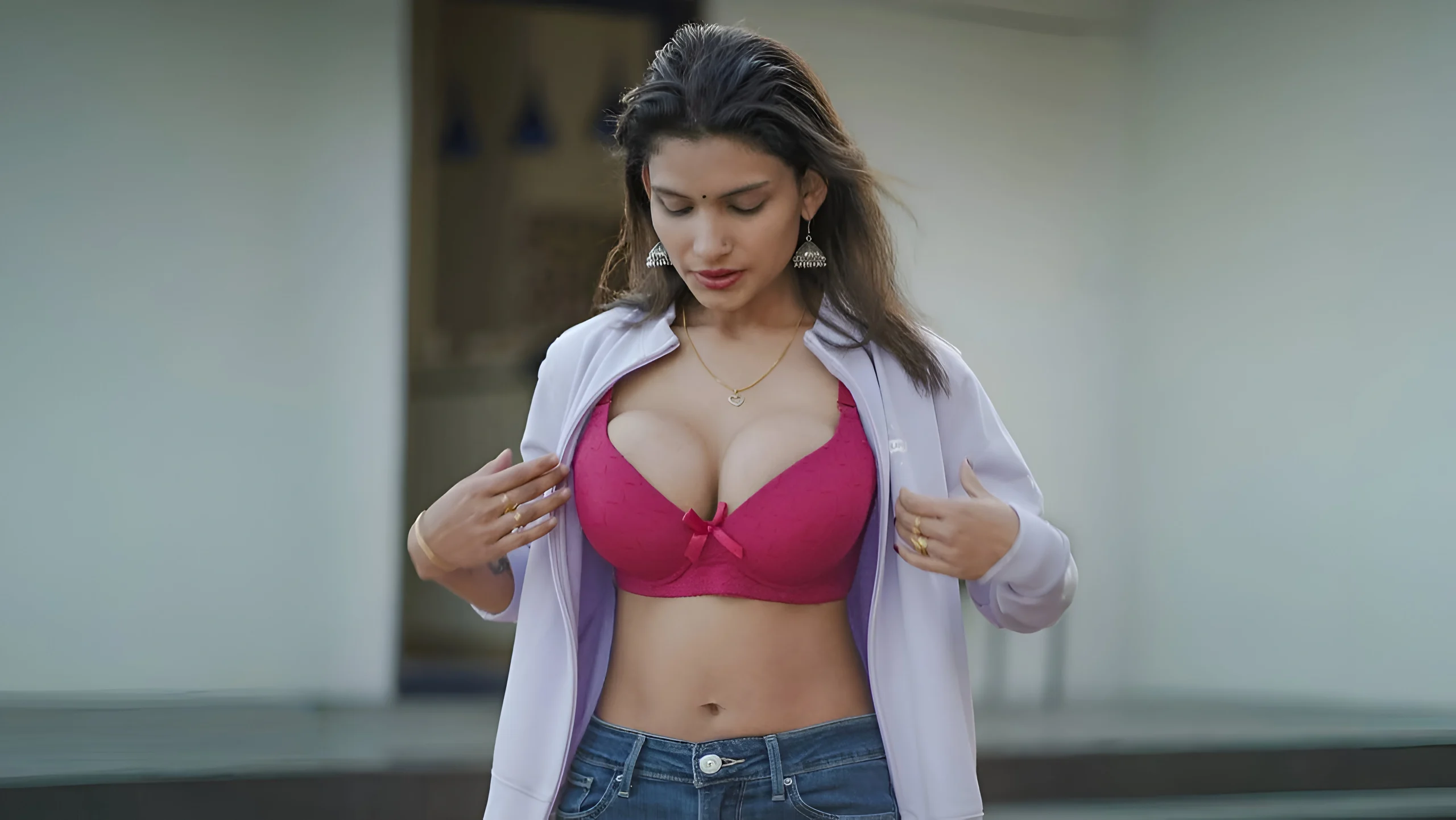
The actress with big boobs who kissed for freedom, modeled for survival, and became Karnataka’s most unforgettable “Good Bhabhi”





She follows eight people. Eight. Not eight thousand. Not eight hundred. Eight. A single-digit following count on an account with 881,000 followers—an asymmetry so extreme it functions as manifesto. In the attention economy of Instagram, where reciprocal following is the currency of community and the algorithm penalizes scarcity, Resmi R Nair has simply declined to participate in the exchange. She follows eight accounts. She has 722 posts documenting a career that spans modeling, adult entertainment, short films, and the particular visibility that comes from being present at a moment of national reckoning.
She is known affectionately to her followers as “Good Bhabhi,” a title that manages to be simultaneously respectful and intimate, familial and desiring. Her bio identifies her as “Indian Model | Actress | Dream Wife.”




Her personal account, @resmi_nair_personal, exists behind a separate door, accessible to those she chooses to admit. The boundary between public and private is not blurred on her profile; it is fortified, maintained, patrolled by a woman who has learned exactly what it costs to make yourself visible in a country that is not always kind to visible women. And she has breasts. Significant, undeniable, conversation-starting breasts that have launched approximately 47,000 comments, 12,000 DMs, and an unknown number of existential crises among viewers who don’t know what to do with a woman who is simultaneously a serious activist and an adult performer who knows exactly how to frame her physical assets.
But here is what separates Resmi R Nair from every other subject I have profiled for The BoobTalk Magazine: She was political before she was visible.




The same body that has been photographed in lingerie and positioned for maximum desirability was present at the 2014 Kiss of Love protest in Kochi, a demonstration against moral policing that became a watershed moment in India’s conversation about public affection, personal freedom, and the state’s appetite for regulating bodies. The same woman who is called “Good Bhabhi” by admirers was called something else entirely by critics—slut, immoral, corruptor of culture, threat to tradition. She did not stop kissing.
She did not stop modeling. She did not stop performing, in every sense of that word. She did not stop being visible. This is the story of Resmi R Nair. It is a story about breasts, inevitably, because breasts are part of her professional instrument and personal identity and public presence.


But it is also a story about protest and performance, about the radical act of refusing to compartmentalize your own existence, about the particular courage required to be both desirable and political in a culture that prefers its women to be one or the other but never both simultaneously.
It is a story about an actress with big boobs who kissed for freedom and never stopped kissing.




The Kiss That Changed Everything
Before the 722 posts and the 881,000 followers and the affectionate moniker “Good Bhabhi,” before the adult films and the short projects and the careful curation of a dual Instagram presence, there was a protest in Kochi that would define Resmi R Nair in ways she could not have anticipated. November 2014. A group of young people gathered at Marine Drive in Kochi to stage what they called the Kiss of Love protest. Their target was moral policing—the unofficial but systematic regulation of public behavior by self-appointed guardians of Indian culture who objected to young couples displaying affection in public spaces.
Their method was deliberate, provocative, and elegantly simple: they would kiss in public, photograph the kisses, and distribute the images across social media. The backlash was immediate and ferocious. Right-wing groups attacked the protesters. Police detained participants.


Media outlets debated whether the protest was legitimate political expression or obscene public spectacle. Women, as always in such debates, were subjected to particular scrutiny—their bodies, their choices, their very presence in public space became evidence for both sides. Resmi R Nair was among those present. Photographs from the protest show her participating directly, her body engaged in the very act that had provoked such controversy. She was not observing from the periphery or supporting from a safe distance. She was kissing, being kissed, documenting and being documented. She was making herself visible at precisely the moment when visibility was most dangerous.
“I was there because I believed in the cause,” she said in a rare interview years later. “But also because I was tired of being told what I could do with my own body.” She paused. “I’m still tired. The difference is I stopped listening.”




This is the essential Resmi observation, the thread that connects her protest participation to her performance career to her current status as an actress with big boobs who has somehow become both a symbol of sexual liberation and a target of moral condemnation. She stopped listening to the voices that claimed authority over her body. She did not replace them with other voices. She simply began listening to herself. The Kiss of Love protest did not immediately transform her into a public figure.
That transformation came later, through the slower accumulation of modeling assignments and acting roles and the gradual construction of a digital presence that would eventually reach nearly a million followers. But the protest established something fundamental about her relationship to visibility.


She understood, earlier than most, that the personal body is always political. That the choice to kiss in public is not merely a choice about intimacy but a choice about citizenship. That the same forces that object to women displaying affection will also object to women displaying ambition, displaying desire, displaying any form of agency that cannot be contained within traditional frameworks.
She understood, and she acted on that understanding, and she has never apologized for doing so.


The Accidental Actress
Resmi R Nair did not set out to become an actress. Her entry into the entertainment industry followed a familiar trajectory for women with photogenic features and the willingness to be photographed. Modeling assignments came first—catalog work, promotional events, the endless cycle of auditions and callbacks that constitutes the entry-level economy of physical appearance. She was successful in this economy, not despite her significant breasts but partly because of them. The industry has specific requirements for specific roles, and bodies like hers are required frequently.
“I didn’t plan to model,” she admitted. “It happened because someone saw me and offered me work. Then someone else saw that work and offered me more. I followed the opportunities.” This is the less romantic version of the discovery narrative that dominates entertainment mythology.
Not the dramatic talent scout spotting future stardom in a crowded marketplace, but the slower, more mundane accumulation of professional relationships built on reliable performance. Resmi showed up, did the work, collected the payment, showed up again. She was professional before she was famous. The transition to acting followed a similar pattern. The adult entertainment sector, where she would eventually make her most visible mark, offered opportunities for performers who combined physical presence with professional reliability. Resmi possessed both.
She also possessed something less common in the industry: the capacity to invest her performances with what reviewers would later call “emotional depth” and “authentic screen presence.” “She’s not just performing,” one director observed. “She’s present. There’s a difference.”






The difference is difficult to articulate but immediately recognizable. Some performers execute their assignments competently and move on. Others occupy the frame as if they belong there, as if the camera is not recording them but collaborating with them. Resmi belongs to the second category. Her performances communicate not just the requirements of the scene but her own relationship to those requirements—conscious, deliberate, chosen. This is not accidental. It is the product of training and temperament and the particular quality of attention she brings to her craft.
“I don’t believe in separating the performer from the performance,” she said. “Not for myself. I’m not pretending to be someone else when I’m working. I’m showing a version of myself that exists in specific circumstances. It’s still me.” The distinction is crucial for understanding both her appeal and the controversy that surrounds her. Resmi does not disavow her performances or distance herself from the person who appears in them.


She claims ownership of every version of herself she has ever presented, from the protest photographs to the modeling portfolios to the adult films that have made her a recognizable name in Karnataka’s entertainment scene. This is, for many viewers, profoundly unsettling. Women in adult entertainment are expected to maintain a certain relationship to their work—grateful for the opportunity, perhaps, but ultimately seeking to transcend it. They are expected to aspire to more legitimate forms of performance, to treat their current work as a stepping stone rather than a destination. Resmi does not perform this aspiration. She does not apologize for the path she chose or distance herself from the roles that made her visible.
She simply continues working, expanding her range, exploring new creative avenues, without ever suggesting that her earlier work was something to overcome. “I’m not ashamed of anything I’ve done,” she stated. “I’ve made choices, some good, some less good, all mine. I don’t owe anyone an explanation for how I arrived at where I am.” 881,000 followers suggest many people are willing to accept her arrival without requiring the explanation she refuses to provide.






The Architecture of a Dual Identity
@resmirnair_model. @resmi_nair_personal. Two accounts, two audiences, two distinct modes of public presence. The boundary between them is not permeable. It is not designed to be crossed without explicit invitation. The professional account contains what you would expect: modeling photographs, promotional content for acting projects, the careful documentation of a career in progress. It is public by design, accessible to anyone with an Instagram account and the curiosity to search for her name. Its 722 posts constitute a comprehensive portfolio of her professional evolution, from early modeling assignments to recent film projects.
Its 881,000 followers are customers, fans, industry colleagues, and the inevitable contingent of viewers whose interest is more difficult to categorize. The personal account contains something else entirely. Its content is not publicly accessible. Its follower count is undisclosed. Its very existence is a statement about the right to maintain boundaries in an economy that rewards constant availability.
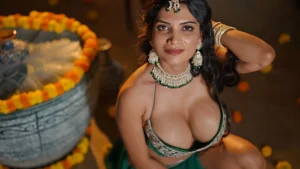
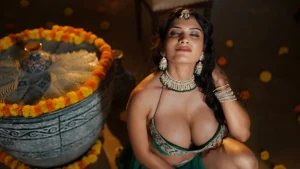

“I need somewhere that’s just mine,” she explained. “Not private, exactly—I share things there too. But I choose who sees them. I control the access.” This is the architecture of dual identity that Resmi has constructed for herself. Not a single public persona that encompasses all aspects of her existence, but two distinct channels with different audiences, different content, different rules of engagement. The professional account performs visibility. The personal account performs selectivity.
Both are authentic. Both are complete. Both are her. “I’m not hiding anything,” she said. “I’m just not showing everything to everyone.” The distinction is one that digital culture, with its relentless demand for total transparency, struggles to accommodate.


We are accustomed to influencers who document every aspect of their existence, who treat privacy as an obsolete concept and boundaries as obstacles to authenticity. Resmi offers a different model: visibility as choice rather than obligation, revelation as gift rather than entitlement. This model is not universally admired. Some critics interpret her dual-account structure as evidence of inconsistency, as if authenticity required total exposure. Others view the invitation-only personal account as a marketing strategy, scarcity manufactured to increase demand.
Both interpretations miss the point. Resmi maintains boundaries because boundaries are necessary for survival in an ecosystem that consumes attention without replenishing it. She gives what she chooses to give, to whom she chooses to give it, on the schedule she determines.


The alternative—constant availability, perpetual performance, the exhausting labor of being always on—is not authenticity. It is burnout. “I learned from the protest that visibility is a tool,” she reflected. “Not a identity. You use it when you need it. You withdraw it when you don’t. The tool doesn’t define you.” 881,000 followers watch her use this tool with precision.
Eight following connections suggest her attention is directed elsewhere, toward relationships and obligations that exist beyond the public frame. The tool does not define her. She defines the tool.


The Eight Who Made the Cut
Eight. It is impossible to spend time on @resmirnair_model without returning to this number, without wondering who the eight are and how they were selected and what it means to be among such exclusive company. The following count is not merely low; it is aggressively, defiantly low. It is a statement posted publicly for 881,000 witnesses to observe and interpret. Who does Resmi R Nair follow? The answer is both revealing and deliberately incomplete. Her following list includes professional collaborators, fellow performers, the official accounts of projects she has worked on. It includes close friends whose identities she protects by including them in this carefully curated circle.
It includes, notably, her own personal account—a gesture of unification that acknowledges the connection between her public and private selves while maintaining the boundary that separates them. It does not include fans. It does not include admirers, regardless of their devotion. It does not include the vast majority of the 881,000 followers who have chosen to witness her professional evolution.


The attention economy’s reciprocal logic—you follow me, I follow you, we both benefit from the algorithm’s preference for mutual connection—is simply not operational here. “I follow people who matter to me,” she said. “Not people who follow me. Those are different categories.” The distinction is one that the platform’s architecture is designed to obscure. Instagram rewards reciprocal following with algorithmic preference; accounts that follow each other receive higher placement in feeds, greater visibility, the cumulative advantages of mutual promotion. Resmi’s refusal to participate in this exchange is, from a purely strategic perspective, irrational.
From a human perspective, it is something else entirely. It is the assertion that her attention is not currency to be traded but resource to be preserved. It is the insistence that relationships cannot be reduced to algorithmic transactions. It is the maintenance of selfhood in a system designed to dissolve selfhood into metrics.


“I don’t want to be available to everyone,” she explained. “I want to be present for the people who actually know me. Those are different things.” Eight people. 881,000 witnesses. The ratio is absurd, almost incomprehensible. It is also, in its quiet way, revolutionary. Resmi R Nair follows eight accounts because she has chosen to reserve her attention for the people who have earned it through relationship rather than merely through observation.
She does not owe her gaze to anyone who gazes upon her. Her attention is not an obligation. It is a gift. She gives it sparingly. She gives it intentionally. She gives it to eight people who have demonstrated that they understand what it means to receive it.


The ‘Good Bhabhi’ Phenomenon
The nickname arrived organically, as the most enduring nicknames always do. “Good Bhabhi.” It appears in her comments section, in fan messages, in the informal discourse that surrounds her public presence. It is simultaneously respectful and intimate, acknowledging her status as a married woman while expressing the particular affection her followers feel toward her. It is not the distant admiration reserved for unapproachable celebrities. It is the warm regard extended to a family member who has earned your trust. Resmi did not choose this nickname. She did not brand herself as “Good Bhabhi” or merchandise the concept or incorporate it into her official biography. It emerged from her audience, spontaneously and organically, because it captured something about her that her official titles could not express.
“I don’t mind it,” she said. “It’s sweet. People feel like they know me. In a way, they do. I share a lot of myself in my work.” She paused. “But I’m not actually their bhabhi. I’m an actress who plays certain roles. The affection is real. The relationship is not.”


This distinction—between the performer and the performance, between the public persona and the private person—is one that Resmi navigates with unusual clarity. She does not discourage her followers’ affection or correct their perception that they know her. She also does not mistake that affection for genuine intimacy or confuse parasocial relationships with actual connection. “I appreciate my fans,” she said. “I appreciate that they show up for my work, that they support my projects, that they defend me when people attack me online.
But I don’t owe them access to my private life because they appreciate my public work.” The “Good Bhabhi” phenomenon illustrates both the rewards and risks of her particular form of visibility. The nickname is affectionate, endearing, a testament to her success in creating a persona that feels accessible and authentic.


It is also, inevitably, a form of containment—the transformation of a complex adult woman into a familiar domestic archetype, the reduction of her many roles to a single relationship category. Resmi accepts the nickname without being defined by it. She acknowledges the affection without accepting the limitations it might impose. She is “Good Bhabhi” to her followers and Resmi R Nair to herself and both identities are real and neither is complete. “I’m many things,” she said.
“Daughter, wife, actress, model, activist, friend. Some days I’m not sure which version is showing up. But they’re all me.” 881,000 followers call her “Good Bhabhi.” Eight people call her by her name. Both forms of address are valid. Neither captures her entirely.


Karnataka’s Unlikely Icon
Bangalore is not Mumbai or Chennai. It occupies its own cultural space in the Indian entertainment ecosystem—tech-savvy, cosmopolitan, yet deeply rooted in Kannada language and Karnataka traditions. It is a city of contradictions, simultaneously forward-looking and tradition-conscious, and it has embraced Resmi R Nair with an enthusiasm that surprises even her. “I didn’t expect to become so connected to Karnataka,” she admitted. “I’m not from here originally. But the audience here has been incredibly supportive. They see my work. They show up for my projects. They defend me when I need defending.” The support is not universal. Karnataka, like every Indian state, contains multiple constituencies with conflicting values.
Some viewers appreciate Resmi’s boldness, her refusal to apologize for her career choices, her willingness to occupy space that women are traditionally discouraged from occupying. Others view her as a corrupting influence, a symbol of moral decay imported from more permissive cultures.


She navigates these conflicting responses with the same clarity she brings to her dual Instagram presence. She accepts the appreciation without being seduced by it. She acknowledges the criticism without being paralyzed by it. She continues working. “I can’t control how people feel about me,” she said. “I can only control how I respond to those feelings. I choose to keep working.” Her projects in Karnataka span multiple genres and formats—short films, digital content, the adult entertainment that has become her signature. Each project adds to her filmography and expands her audience. Each project also attracts criticism from those who believe she should be doing something else, something more respectable, something less visible.
Resmi does not engage with this criticism. She does not defend her choices or explain her reasoning or attempt to convince skeptics of her legitimacy. She simply continues working, accumulating credits, building a body of work that stands as its own defense.






“I don’t need everyone to approve of me,” she said. “I need to approve of myself.” 881,000 followers suggest her self-approval is shared by a substantial constituency. Karnataka’s entertainment scene has never had a figure quite like Resmi R Nair—simultaneously mainstream and marginal, celebrated and criticized, visible on her own terms rather than anyone else’s.
She is not the kind of icon the state expected. She is the kind of icon the state needed.


The Protest Continues
Ten years after the Kiss of Love protest, Resmi R Nair is still kissing. Not literally, though she still photographs herself in intimate poses and shares those photographs with her 881,000 followers. Not continuously, though her career has maintained remarkable momentum through a decade of cultural shifts and industry transformations. But symbolically, politically, in the deeper sense of refusing to surrender her body to the regulatory ambitions of those who would control it. The protest never ended. It merely changed form.
“When I was at Marine Drive in 2014, I thought we were fighting for a specific freedom,” she reflected. “The freedom to express affection in public without being harassed. That was the immediate goal.” She paused.

“Now I understand that the freedom we were fighting for was larger. It was the freedom to exist in public space at all, as a woman, without constantly negotiating permission from people who believe they have authority over you.” This is the through-line connecting the activist of 2014 to the actress of today. The Kiss of Love protest was about the right to kiss in public. Resmi’s career has been about the right to work in public, to perform in public, to display her body in public, to earn money from her visibility in public. These are not separate struggles. They are the same struggle, conducted on different terrain.
The opponents have changed, or perhaps they have only changed their tactics. Moral policing in 2014 meant physical intimidation, police detention, the threat of violence for couples who dared to touch each other on Marine Drive.




Moral policing today means comments sections and review bombing and coordinated campaigns to deplatform performers whose work is deemed obscene. The methods evolve. The objective remains constant: the regulation of female bodies by forces that claim cultural or religious or traditional authority. Resmi continues to resist this regulation. Not through organized protests, though she still supports those who organize them. Not through political advocacy, though she has not abandoned the convictions that brought her to Marine Drive.
She resists through her continued existence as a visible, working, unapologetic performer who refuses to disappear. “Every time I post a photograph, I’m protesting,” she said. “Every time I accept a role, I’m protesting. Every time I show up and do my job and don’t apologize for it, I’m protesting.” She paused. “The protest is my life now. Not an event I attended once. A life I live every day.”

The Breasts as Political Territory
There is no way to write about Resmi R Nair without writing about her breasts. This is not because her breasts are the most interesting thing about her—they are not, and the more time you spend with her work and her words, the more they recede into the background of your attention. It is because her breasts have been, from the beginning of her public career, a site of political contestation that she did not choose and cannot control.
The same breasts that were photographed at the Kiss of Love protest, engaged in the intimate act that provoked national controversy. The same breasts that have been displayed in modeling portfolios and adult films, generating revenue and visibility and the particular scrutiny reserved for women who profit from their own desirability.


The same breasts that her followers admire in comments sections and her critics cite as evidence of moral failure and her colleagues accept as simply part of her professional instrument. These breasts are not merely physical attributes. They are political territory. They have been claimed by multiple constituencies, each attempting to attach its own meaning to their existence. For some, they represent sexual liberation, the freedom of women to display their bodies without shame. For others, they represent moral decay, the commodification of intimacy, the erosion of traditional values. For others still, they represent simply an asset, professionally deployed, no more meaningful than a dancer’s legs or a singer’s vocal range.
Resmi does not adjudicate between these interpretations. She does not endorse one meaning and reject others. She does not attempt to stabilize the meaning of her own body or control how it is perceived. “I don’t have to define what my body means,” she said. “I just have to live in it.”


This is, perhaps, her most radical position. In an era that demands constant self-narration—the endless performance of explanation, justification, interpretation—Resmi simply declines to perform. Her body is present in her work. Its meaning is generated by viewers, multiplied across 881,000 individual interpretations, none of which she is obligated to validate or correct. “I used to think I needed to control how people saw me,” she admitted. “If someone called me a slut, I needed to prove I wasn’t. If someone called me a feminist icon, I needed to live up to that. I was constantly responding to other people’s definitions of who I was.”
She paused. “Then I realized I don’t need to respond. I don’t need to prove anything. I don’t need to be consistent with anyone’s expectations, including my own from five years ago.”


The breasts remain. They are large, significant, impossible to hide even when she styles for concealment. They will continue to be photographed and commented upon and interpreted by audiences who bring their own frameworks to the encounter. Resmi will continue to inhabit them without apology, without explanation, without the exhausting labor of managing other people’s perceptions. The body is not a statement. It is not a manifesto or a protest sign or a symbol of anything beyond itself. I
t is simply the instrument through which she lives her life and performs her work and maintains her visibility in a culture that would prefer she disappear. “I’m still here,” she said. “That’s the only statement I need to make.”


The Audience and Its Desires
Eight hundred and eighty-one thousand followers constitute not an audience but a multitude. They occupy different positions on every conceivable axis of identity and ideology. They follow Resmi for different reasons and derive different meanings from her work and maintain different relationships to the woman whose image they encounter on their screens. Some follow for the photography. Resmi’s modeling work is technically accomplished, professionally executed, visually striking.
Her understanding of lighting and composition and the particular geometry of the female form is evident in every professionally produced image. These followers appreciate her craft without necessarily engaging with her politics.

Some follow for the performances. Her acting work, particularly in adult entertainment, has earned her a reputation for emotional authenticity that transcends the limitations of genre. These followers are invested in her career trajectory, her choice of projects, her evolution as a performer. They are fans in the traditional sense, appreciating the work without necessarily knowing the worker. Some follow for the body. This is the uncomfortable truth that discussions of Resmi R Nair often dance around without directly addressing. She has significant breasts.
She photographs them prominently. She profits from their prominence. Some of her 881,000 followers are there primarily, sometimes exclusively, to view these breasts. Their appreciation is not intellectual or artistic or political. It is simply desirous.


Resmi does not police the boundaries between these constituencies. She does not attempt to purify her audience of viewers whose motivations she might not endorse. She does not require her followers to pass ideological tests or demonstrate appropriate respect before being permitted to observe her image. “I don’t care why people look at me,” she said. “I care that they look. The rest is their business.” This is not cynicism. It is not the exhaustion of a woman who has spent years being looked at and has ceased to care about the quality of attention she receives. It is something else entirely: the complete transfer of interpretive authority from performer to audience, the acknowledgment that meaning is generated in the encounter rather than the intention.
“I can’t control what people feel when they see me,” she explained. “I can’t make them respect me if they’re only interested in my body. I can’t make them desire me if they’re only interested in my politics. I can only be present and let them respond however they respond.”
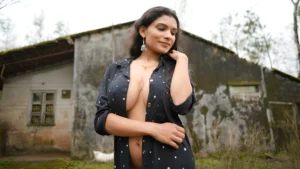
This is the opposite of the curated authenticity that dominates influencer culture. It is not the careful construction of a persona designed to attract a specific demographic with specific values. It is the radical openness of a woman who has ceased to perform for approval and simply performs. 881,000 followers have responded to this openness with their attention.
Their motivations remain their own. Resmi does not attempt to know them, categorize them, or manage them. She simply continues working, posting, being visible. The audience does its own work. She does hers.


The Legacy Question
What does it mean to leave a mark on India’s entertainment landscape? The question is one that Resmi R Nair, at 722 posts and counting, has not fully answered. Her career is still in progress, her filmography still accumulating entries, her audience still expanding. The legacy she will leave is not yet complete; it is being written in real time, one project and post and public appearance at a time.
But certain contours are already visible. She has challenged stereotypes about women in adult entertainment, not through explicit advocacy but through the simple fact of her continued existence as a serious performer who refuses to apologize for her work.




She has demonstrated that commercial success and artistic integrity are not mutually exclusive, that work produced for desiring audiences can also be work produced with craft and commitment. She has maintained boundaries in an economy that punishes boundaries, reserving her attention for eight people while 881,000 compete for it. She has, perhaps most significantly, refused to compartmentalize her own existence.
The activist and the actress, the model and the wife, the public performer and the private individual—these are not separate selves competing for dominance but facets of a single personality that Resmi has integrated through sheer force of will.


“I don’t want to be remembered as the woman from the Kiss of Love protest who also did some films,” she said. “Or the adult actress who used to be an activist. I want to be remembered as someone who lived her life on her own terms and didn’t apologize for it.” She paused. “Whether that’s a legacy worth having—I guess that’s for other people to decide.” 881,000 followers have already decided. They follow her, engage with her content, defend her against critics, and anticipate her future projects.
They have incorporated her into their own narratives about desire and dignity, visibility and vulnerability, the rights of women to occupy public space without constant negotiation. This is not the traditional legacy of awards and accolades and official recognition. It is something more diffuse and perhaps more durable: the imprint of a personality on the consciousness of a generation.


The women who saw Resmi at Marine Drive in 2014 and recognized something of themselves in her willingness to be visible. The performers who entered adult entertainment after her and found a path already cleared. The viewers who encountered her work and reconsidered their assumptions about what adult entertainment could be. These are the threads of legacy. They are not yet woven into a complete tapestry. Resmi is still working, still adding to her filmography, still expanding her audience. The legacy question cannot be answered because the legacy is still being constructed.
“I don’t think about legacy,” she said. “I think about the next project. The next role. The next photograph. The next opportunity to do what I do.” She paused. “If there’s a legacy when I’m done, that’s fine. But I’m not done.”


The Body That Carried Her
There is a photograph of Resmi from 2023 that I have returned to repeatedly during the composition of this piece. She is standing in what appears to be natural light—morning, perhaps, or the golden hour before sunset. Her hair is loose. Her expression is direct, unapologetic, slightly amused. She wears a fitted blouse that performs the impossible task of both containing and revealing her significant breasts, and she gazes at the camera with the particular confidence of someone who has spent years being photographed and has long since ceased to find the process intimidating. The photograph is not her most technically accomplished or her most aesthetically striking.
It is not the image she would likely choose to represent her career or her identity or her legacy. But it captures something essential about Resmi R Nair that more polished images sometimes obscure: the comfort she has achieved in her own skin.


This comfort is hard-won. It is the product of ten years of visibility, of protest and performance and the constant negotiation of public existence. It is the result of countless decisions about what to show and what to withhold, what to defend and what to ignore, what to claim and what to release. It is not the effortless confidence of someone who has never been challenged but the earned confidence of someone who has been challenged repeatedly and survived. “I like my body now,” she said. “I didn’t always. For a long time, I thought of it as something I had to manage, control, improve.
Now I think of it as something that carries me where I need to go.” She paused. “It’s carried me a long way. From Aligarh to Mumbai to Bangalore. From the protest to the films to wherever I’m going next. It’s been a good vehicle.”

The body has not always been cooperative. It has attracted attention she didn’t want and criticism she didn’t deserve and desires she didn’t invite. It has been photographed in contexts she might now reconsider and displayed in ways she might now revise. It has been the site of pleasure and labor and the particular exhaustion that comes from constant visibility. But it is hers. It has always been hers. And she has, through the long process of living in it, finally come to accept it as simply her own.
“I’m not trying to transcend my body,” she said. “I’m not trying to prove I’m more than my breasts or better than my work or beyond my choices. I’m just trying to live in it, honestly, without pretending to be something I’m not.”




The photograph captures this honesty. The direct gaze, the unapologetic posture, the quiet confidence of someone who has stopped performing for approval and simply exists. The breasts are present, inevitably, but they are not the subject of the image. The subject is presence itself. Resmi R Nair is present. She has been present since 2014, when she kissed for freedom in Kochi.
She continues to be present, through 722 posts and 881,000 followers and a career that refuses to be contained by any single category or criticism or compliment. She is present. That is enough. That has always been enough.

The Future Tense
What comes next for Resmi R Nair is, like all interesting futures, not entirely legible from the present. She continues to work, accumulating projects and expanding her range. She continues to post, documenting her professional evolution for 881,000 witnesses. She continues to maintain the boundaries that have preserved her sanity through a decade of public visibility—eight following connections, a separate personal account, the careful reservation of her attention for people who have earned it through relationship rather than observation.
Her upcoming projects remain, for now, undisclosed. She hints at them in interviews and social media posts without revealing specific details. The mystery is not strategic withholding but simple caution; she has learned not to announce work before it is confirmed, not to promise what she cannot guarantee, not to invite scrutiny into endeavors still in formation.




“I’m excited about what’s coming,” she said. “I can’t talk about it yet. But I’m excited.” The excitement is palpable even through the deliberate vagueness of her language. After a decade in the entertainment industry, after the protest and the films and the constant negotiation of public visibility, Resmi R Nair remains genuinely enthusiastic about her work. She has not been hardened by experience or disillusioned by criticism or exhausted by the demands of constant performance. She still wants to work. She still wants to create. She still wants to be visible, on her own terms, for audiences who appreciate what she offers. “I don’t know how long I’ll keep doing this,” she admitted. “Acting, modeling, being public. It’s not the kind of career you can plan decades in advance.
The industry changes. Audiences change. I change.” She paused. “But I’m not done yet. I still have things I want to do, roles I want to play, stories I want to tell. When I’m done, I’ll know. I’m not there yet.”






881,000 followers wait for whatever comes next. Eight people know her well enough to wait without anticipation. The rest of us scroll through 722 posts documenting a career already remarkable and still unfinished. The future tense suits her. She has always been becoming, always arriving, always on the verge of the next incarnation. The girl who kissed for freedom in 2014 could not have predicted the woman who performs for audiences in 2024.
That woman cannot predict who she will be in 2034. The only certainty is that she will continue becoming. The body will carry her wherever she needs to go.




Conclusion: The Protest of Presence
Ten years after the Kiss of Love protest, Resmi R Nair is still kissing. She is kissing in photographs shared with 881,000 followers. She is kissing in film scenes performed for audiences across Karnataka and beyond. She is kissing the boundaries that separate public from private, professional from personal, performance from identity. She is kissing the expectations that would contain her, the criticisms that would diminish her, the categories that would define her.
She is kissing, still kissing, always kissing. Not because the protest requires continuation but because the protest has become inseparable from her existence. She does not attend protests; she lives protestingly, in the persistent refusal to surrender her body to forces that would regulate it.


“I don’t think of myself as an activist anymore,” she said. “I think of myself as someone who lives her life without asking permission. If that’s activism, fine. But it’s also just… living.” She paused. “I prefer living.” 722 posts. 881,000 followers. Eight following connections. A decade of visibility, from Marine Drive to the present moment, documented in photographs and films and the memories of everyone who has encountered her work. She is not the same woman who kissed for freedom in 2014. That woman was younger, less experienced, still learning the costs of visibility and the strategies for managing them. The woman who photographs herself for Instagram in 2024 has accumulated knowledge that can only be acquired through survival.
She has been criticized and celebrated, desired and dismissed, evaluated on every conceivable metric and found simultaneously wanting and excessive. She has survived. She continues surviving. She continues working, posting, performing, being visible. The protest of presence continues. “I’m still here,” she said. “That’s the only statement I need to make.” It is enough. It has always been enough.