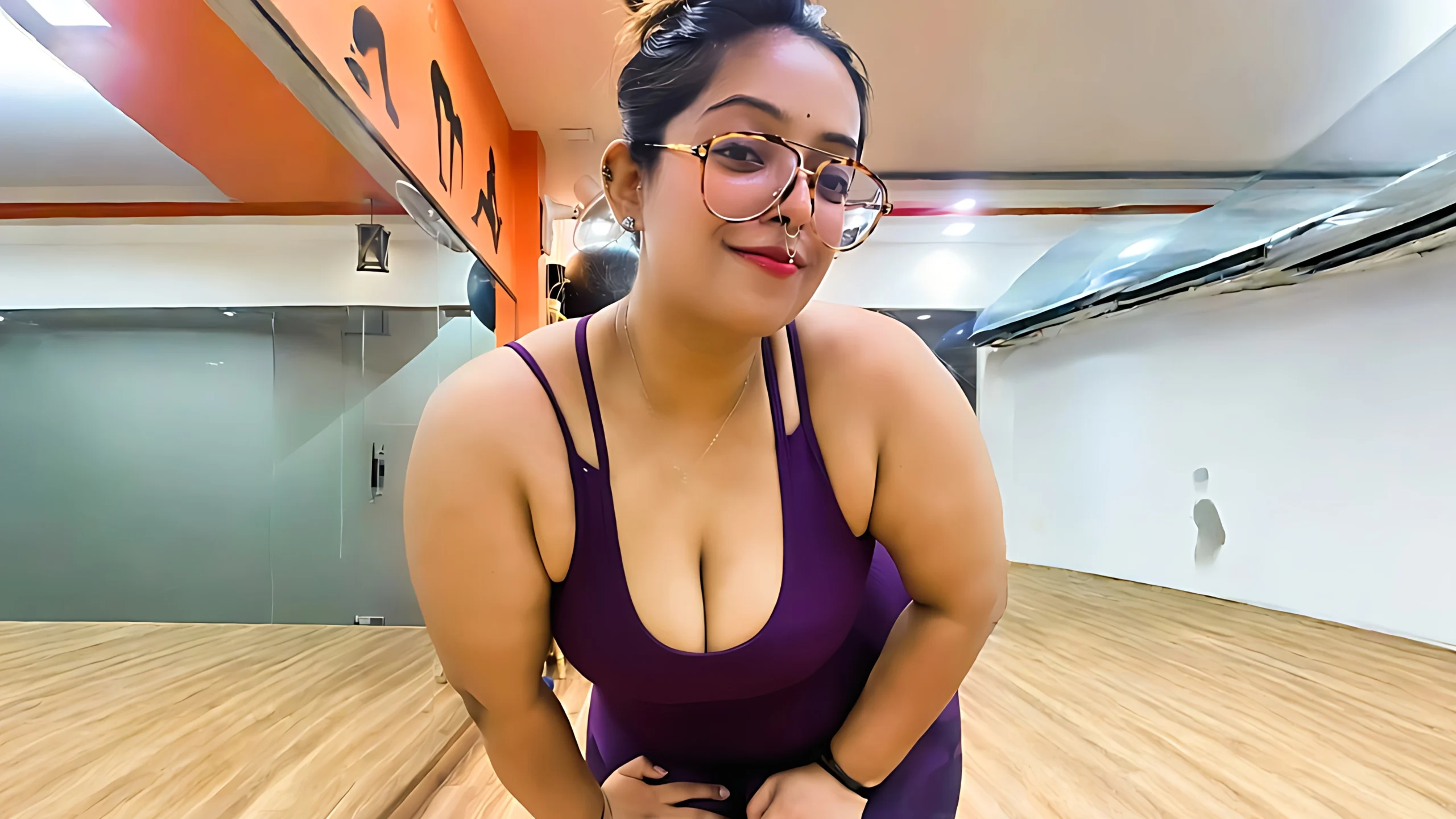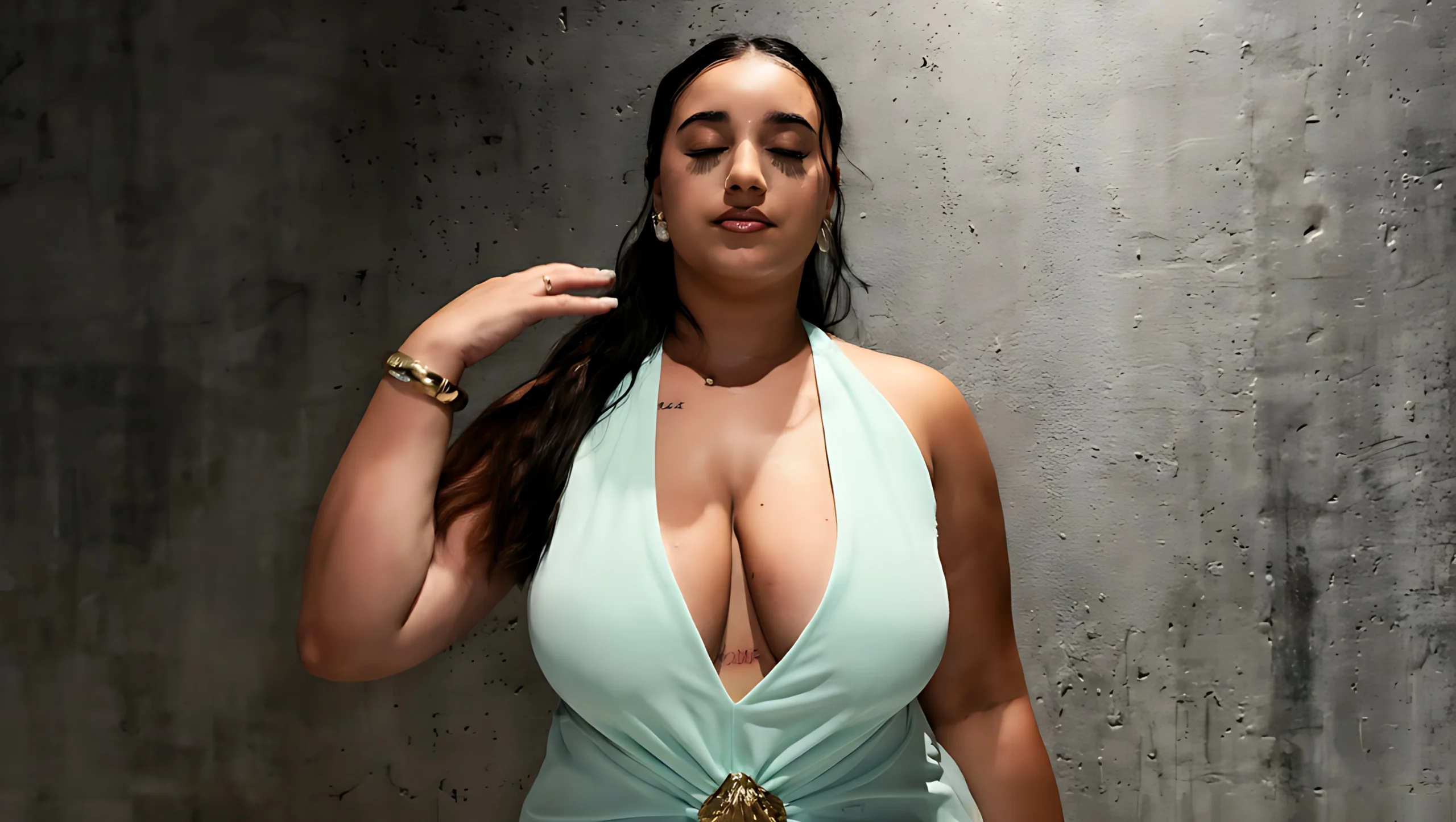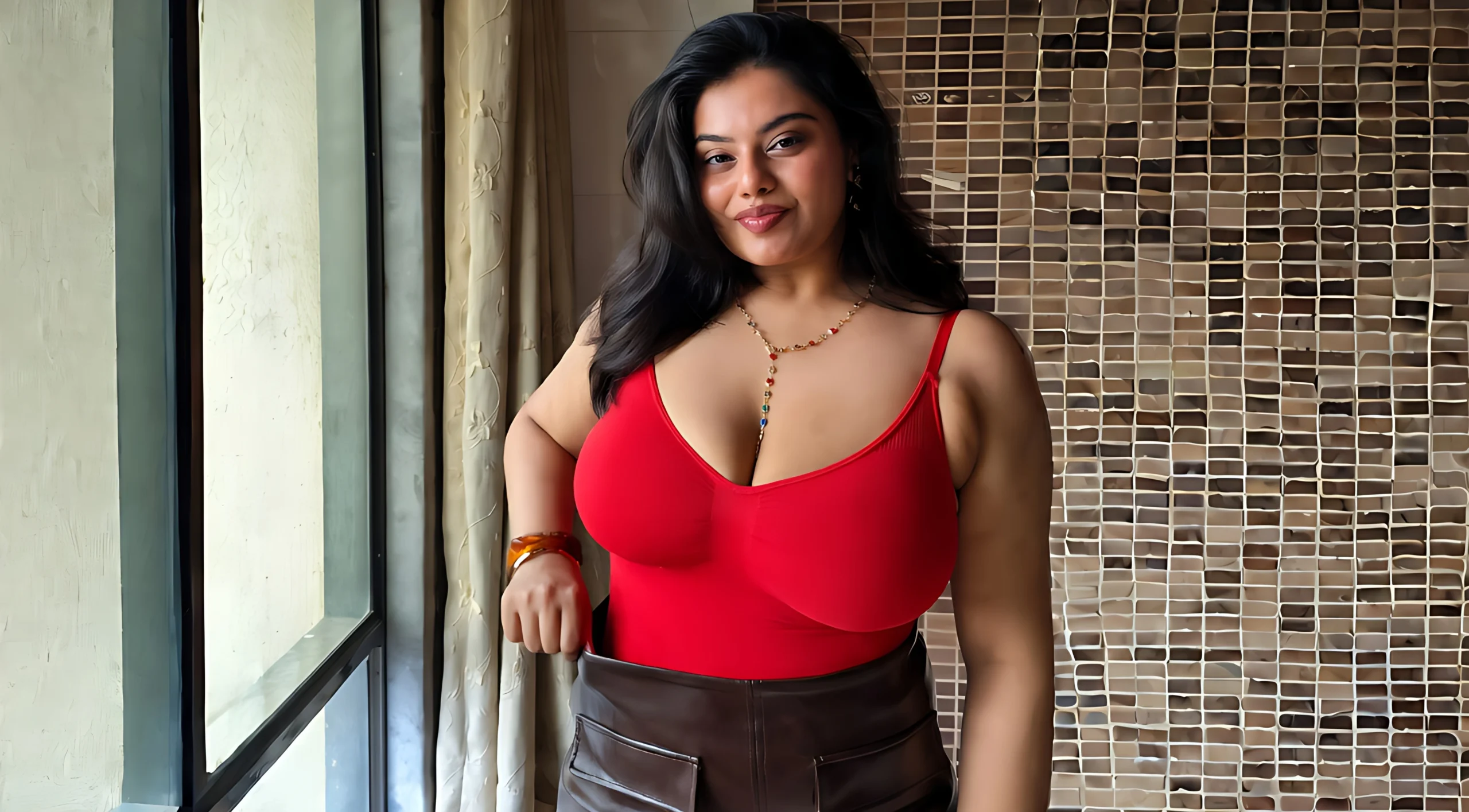

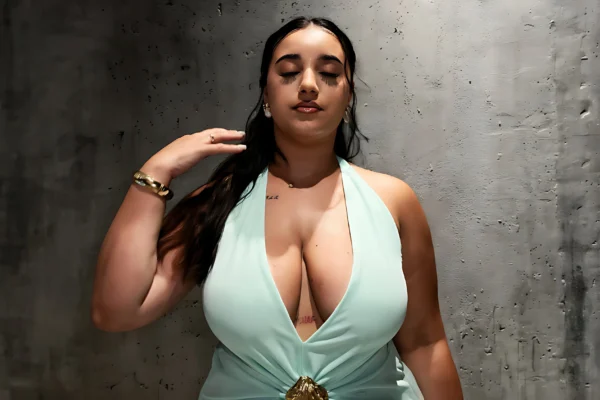
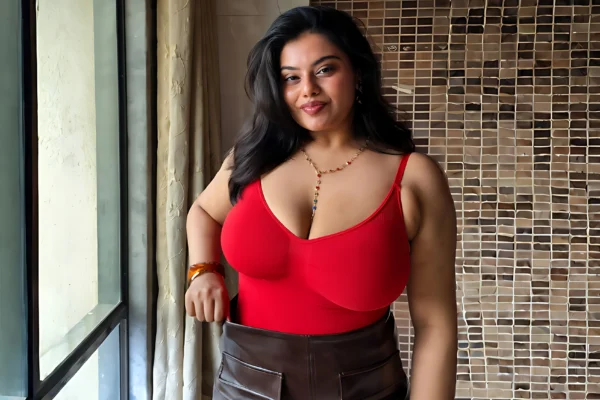



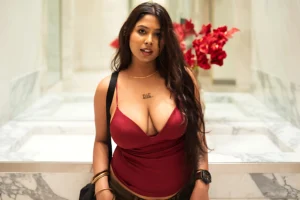

Muskaan Agarwal turns small-town ambition into Mumbai stardom, proving one million followers can witness a woman rewriting her destiny.


She was born Khushbu Agarwal in Mumbai, but she was raised in Aligarh, and that geographical footnote contains the entire arc of her origin story. Mumbai births dreams. Aligarh tests them. The distance between these two cities—approximately 1,300 kilometers of highway and railway and the particular terrain of familial expectation—is the distance Muskaan “Musku” Agarwal has traversed not once but repeatedly, in both directions, until the journey itself became the story. She is 27 years old. She has 838 posts on Instagram documenting a transformation that is still unfolding.
She has one million followers who have watched this transformation with the particular intensity reserved for women who refuse to be categorized. She follows 459 accounts—a number that suggests either ruthless curation or the simple reality that when one million people are watching you, you don’t have much time to watch anyone else.



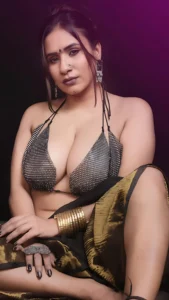
Her bio is efficient, almost utilitarian: “Artist. Actor | Influencer | Fashion Model. DM or Email For Brand Collaborations & Paid Partnership. 🏩MUMBAI.” No manifesto. No mission statement. No hashtag declaration of independence or empowerment or reclaimed gaze. Just the facts of her professional existence, arranged in descending order of what she wants you to understand about her. Artist first. Actor second. Influencer third. Model fourth. The body—those breasts, significant and undeniable and frequently discussed in the comments section of every post she publishes—is not mentioned. It doesn’t need to be. It is present in every frame, impossible to ignore, equally impossible to reduce to the sum of its measurements.
It is the instrument through which she performs her craft, not the craft itself. This is the central tension of @musku_agarwal, and it is the reason I have spent the past six weeks immersed in her feed, her filmography, her interviews, her rare public statements about a journey she prefers to document rather than narrate.


Muskaan Agarwal emerged from the Ullu universe—that peculiar corner of Indian streaming where erotic thrillers are the primary export and bodies are the primary currency—and somehow emerged not diminished but expanded. She played Shreya in Palang Tod: Bekaboo Dil and convinced viewers she was more than the sum of her scenes. She moved through Charmsukh and Rupaya 500 and left behind the distinct impression that she was visiting this genre rather than being defined by it. Then she did something that the algorithmic playbook insists is impossible: she walked into mainstream cinema without erasing the path she’d taken to get there. Chaar Saheliyan in 2022. Payal and Mard Ko Dard approaching in 2024.
Thrillers and romances and the kind of range that makes casting directors sit up straighter. One million followers watched this transition. One million followers witnessed a woman refuse to apologize for her origins while simultaneously exceeding them.

This is her story. It is also, in ways she probably never anticipated, a story about bodies and the meanings we attach to them. About breasts that become both asset and obstacle. About the particular calculus required of women who occupy the intersection of desire and ambition, who are looked-at and look-ted-at and must somehow remain the authors of their own visibility. This is the story of Musku Agarwal. I have written about Henna’s quiet occupation of space, Ali Smiles’s radical reciprocity, Alyssa Holmes’s disciplined withholding, and Stacy’s honest transaction. But Muskaan represents something else entirely—not a position along this spectrum but an entirely different axis of measurement. She is not just an Instagram model with big boobs navigating the attention economy.
She is an actress who happens to have big boobs, a mainstream talent who emerged from the erotic streaming ecosystem, a woman who has made herself visible across multiple platforms and genres and refuses to let any single frame contain her. She is, in other words, the most complicated subject I have yet attempted for The BoobTalk Magazine. And the most necessary.


The Girl from Aligarh
Before the Ullu series, before the million followers, before the brand collaborations and the mainstream film projects and the disciplined curation of a public image that reveals exactly what it intends to reveal, there was a girl in Aligarh who performed in school plays and didn’t yet know that performance could be a life. Aligarh is not Mumbai. It is not even particularly close to Mumbai, geographically or temperamentally. Located in Uttar Pradesh, approximately 130 kilometers from Delhi, it is known primarily for three things: Aligarh Muslim University, the lock manufacturing industry that has earned it the nickname “City of Locks,” and the particular quality of small-city Indian life that produces either fierce ambition or quiet accommodation.
Muskaan, born Khushbu Agarwal in Mumbai but raised in Aligarh from early childhood, contained multitudes that her immediate environment could not yet name. She was a girl who performed in school productions and felt something ignite. She was a daughter navigating the expectations of a family that had already made the journey from Mumbai to Aligarh and perhaps did not understand why anyone would want to reverse it.
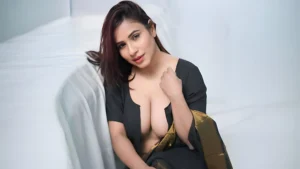
She was a young woman with a body that was already attracting attention she hadn’t asked for and didn’t yet know how to manage. “I was always performing,” she said in one of her rare interviews, the kind granted to emerging talent before the machinery of public relations learns to sand away all specificity. “Not on purpose. Just… existing. Trying on different versions of myself to see which one fit.” This is the essential Muskaan observation, and I return to it repeatedly as I scroll through her 838 posts. The idea of identity as costume, as collection, as ongoing experiment.
She was trying on versions of herself in Aligarh school productions long before she was trying on lingerie sets for Ullu cameras or designer lehengas for mainstream film promotions. The impulse is the same. The audience has merely expanded.


Her formal training in acting came later, after she made the decision to reverse her family’s geographical trajectory and return to Mumbai. She pursued academic study of performance, the kind that requires you to understand not just how to deliver a line but why the line exists, what it reveals about character and motivation and the invisible architecture of storytelling. But before the training, there was the instinct. The girl in Aligarh who stood on stages and felt something that could not be satisfied by applause alone. The young woman who looked at the distance between where she was and where she wanted to be and began, methodically, to close it.
“People from small cities have to work harder to be taken seriously,” she observed. “Not because we have less talent. Because we have to prove that talent isn’t location-dependent.” She paused. “Also we have to explain where Aligarh is approximately seven thousand times.” The self-deprecation is characteristic.
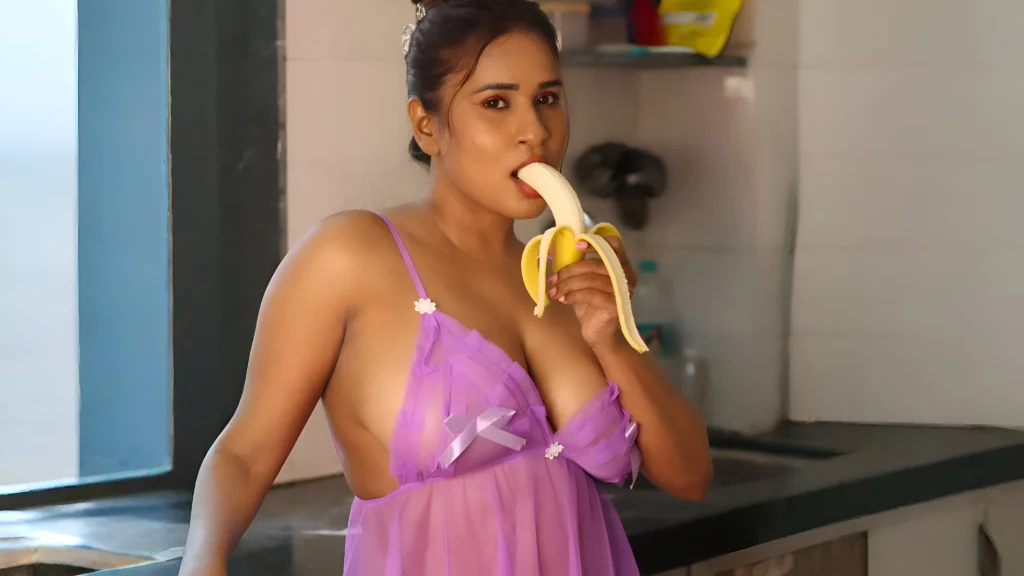
She deploys it strategically, a softening agent for conversations that might otherwise become too heavy. But beneath the humor is a genuine observation about the particular labor of provincial origin. You carry your hometown with you like a second shadow. Every achievement is measured against the distance you’ve traveled. Every success is also, implicitly, a departure. Muskaan has traveled 1,300 kilometers and approximately fifteen distinct professional incarnations. She has not, despite the obvious temptations, attempted to erase the evidence of departure.
Her Instagram bio still lists Mumbai as her home base, not her origin. But her origin appears elsewhere, in the specific quality of her ambition, the way she approaches each new project as both opportunity and proof. She is still explaining where Aligarh is. She is still closing the distance.


The Body Before the Frame
There is no way to write about Muskaan Agarwal without writing about her breasts. This is not because her breasts are the most interesting thing about her—they are not, and the more time you spend with her work, the more they recede into the background of your attention. It is because her breasts have been, from the beginning of her public career, a subject of conversation that she did not initiate and cannot control. She is 5′4″. This is statistically unremarkable but visually significant, because significant breasts on a frame of average height create a particular proportion that cameras either exaggerate or minimize depending on the intended effect. Muskaan has been photographed both ways, sometimes within the same project.
She has been styled to emphasize and styled to conceal. She has been the object of desire and the subject of dismissal, sometimes by the same viewers, sometimes within the same comment thread. “I don’t think about my body when I’m performing,” she said. “I think about the character. What she wants. What she’s afraid of. What she’s trying to hide or reveal or escape.” She paused. “The camera doesn’t care about the difference. But I do.”
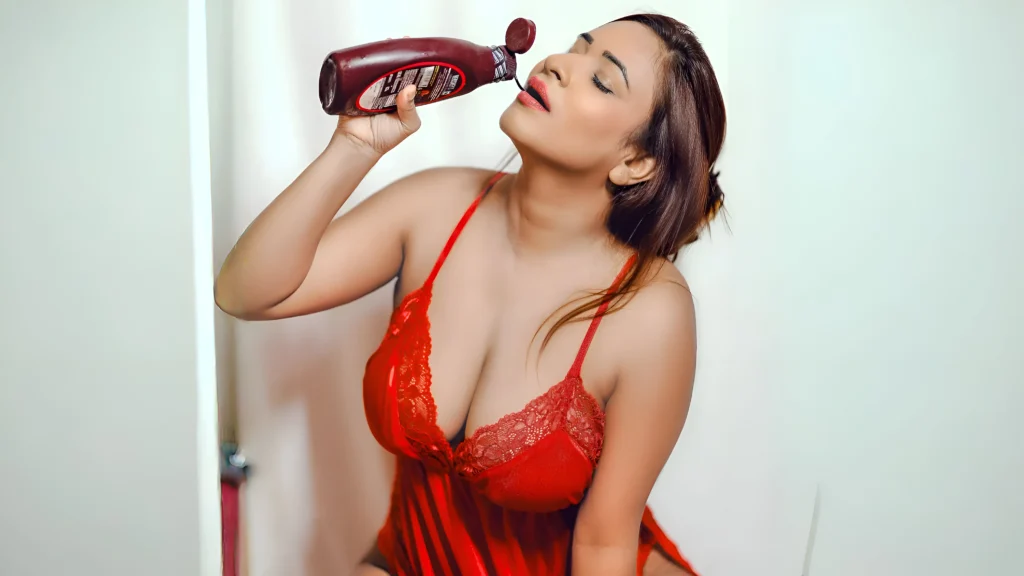
This is the fundamental tension of her position. She is an actress who has trained in the craft of embodiment, who understands that performance is conducted through the instrument of the physical self. She is also a woman whose physical self has been categorized, evaluated, and frequently reduced by viewers who cannot or will not distinguish between the performer and the performance. The Ullu projects that launched her into public visibility are, inevitably, the primary site of this tension. Palang Tod: Bekaboo Dil, Charmsukh, Rupaya 500—these are series designed to showcase desire, to position the female body as both subject and object of erotic attention. Muskaan’s roles in these productions required her to be looked-at in very specific ways, to occupy the frame as something to be desired.
She did this with remarkable composure. Reviewers noted her “poised yet versatile charm,” her ability to inhabit layered characters even within the constraints of the genre. She was not merely present in these scenes; she was performing in them, making choices about expression and movement and the subtle communication of interiority.


But the public conversation about these performances focused almost exclusively on her body. This is not unique to Muskaan. It is the common experience of actresses who work in erotic content, in any culture, in any era. The labor of performance is rendered invisible by the visibility of the performing body. The choices she made—about how to occupy the frame, what to reveal and what to withhold, how to communicate desire without being consumed by it—are erased by the simple fact of her physical presence. What is unique is how she has navigated this erasure.
“I don’t regret the work I’ve done,” she stated, with the particular clarity of someone who has been asked this question many times and has refined her answer to its essential elements. “Every project taught me something. Every role prepared me for the next one.” She did not add: And I will not apologize for the path I chose. She did not need to. The absence of apology is itself a statement.
The Ullu Universe and Its Discontents
The Ullu streaming platform occupies a peculiar position in the Indian entertainment ecosystem. Launched in 2018, it rapidly became synonymous with erotic content—web series designed to circumvent traditional censorship while appealing to the vast appetite for desire that mainstream cinema could only gesture toward. The platform’s name, derived from the Hindi word for “owl,” suggests wisdom, but its reputation is considerably less elevated. For actresses, Ullu represents both opportunity and obstacle. The opportunity is visibility, rapid and intense, with audiences hungry for content that traditional media is reluctant to provide. The obstacle is categorization, the tendency of viewers and casting directors alike to associate performers with the genre that first brought them attention.
Muskaan Agarwal’s breakout role in Palang Tod: Bekaboo Dil in 2021 was her introduction to this double-edged ecosystem. She played Shreya, a character navigating the treacherous waters of desire and deception. The role required her to occupy the frame as an object of erotic attention while simultaneously communicating the interiority that would distinguish her from mere decoration.


She succeeded. Reviews noted her performance. Viewers remembered her face. The Ullu algorithm, which rewards engagement above all else, pushed her content to expanding audiences. But success in the Ullu universe is always conditional. The same visibility that launches careers also constrains them. Actresses who emerge from erotic content are assumed to have limited range, limited ambition, limited capacity to transcend the genre that made them recognizable. “The assumption is that you didn’t choose this path, you ended up on it,” Muskaan observed. “That you had no other options.
That you’re grateful for any opportunity because you don’t have the qualifications for better ones.” She paused, and the pause itself was a form of commentary. “The assumption is wrong.” Her subsequent career trajectory has functioned as a systematic rebuttal of these assumptions.

She did not abandon the Ullu universe so much as expand beyond it, adding mainstream projects to her filmography without disavowing the work that preceded them. Chaar Saheliyan in 2022 demonstrated her capacity for ensemble drama. Payal and Mard Ko Dard, scheduled for 2024, position her within traditional Bollywood narratives. Her range, she has proven, extends from the gritty thriller Jaal to the heartfelt romance Love Guru.
This is not the career path of an actress who ended up on a path. This is the career path of an actress who has been navigating with intention since she first left Aligarh.


The Instagram Architecture
Scroll through @musku_agarwal‘s 838 posts and you will observe a carefully calibrated architecture of revelation and restraint. The feed is predominantly professional—stills from film projects, promotional content for upcoming releases, professionally photographed editorial spreads that showcase her range as a model. Interspersed are glimpses of the personal: travel photographs from destinations that remain unspecified, fitness content documenting the disciplined regimen that maintains her instrument, occasional behind-the-scenes moments that feel genuinely candid rather than strategically curated.
What you will not find is the relentless availability that characterizes so many Instagram models with big boobs. Muskaan does not post daily. She does not respond to every comment or engage in the reciprocal following economy that defines the platform’s relational architecture.

Her 459 following count is modest for someone with one million followers, suggesting either genuine selectivity or the simple reality that her attention is directed elsewhere. The breasts are present in this feed, inevitably. They are impossible to hide even when she styles for concealment, and she frequently styles for revelation. But they are presented as one element of a comprehensive visual identity, not the organizing principle of her public image. “I post what I want to remember,” she said, when asked about her Instagram philosophy. “Not what I think people want to see. Those are different things.” The distinction is crucial.
The algorithm rewards the second approach—content optimized for engagement, designed to trigger the maximum response from the maximum audience. Muskaan’s feed, by contrast, feels optimized for something else entirely. Something like documentation. Something like preservation.


She is 27 years old. She has already lived multiple professional lives—the Aligarh school performer, the Mumbai acting student, the Ullu breakout, the mainstream crossover. Her Instagram feed is the archive of these incarnations, the evidence that each version of herself was real and worthy of record. One million followers have chosen to witness this archive. They scroll through 838 posts documenting a woman who refuses to be reduced to any single frame.
They watch her evolve in public, making choices about visibility and vulnerability that most of us conduct in private or not at all. And they comment. Oh, they comment.

The Comments Section as Cultural Document
The comments section of @musku_agarwal is a sociological treasure trove and a psychological hazard in approximately equal measure. Scroll through any post featuring her in revealing attire—which is to say, scroll through most posts—and you will encounter the full spectrum of public response to women who occupy visibility on their own terms. There are marriage proposals and anatomical assessments and the particular strain of male confusion that manifests as hostility.
There are women expressing admiration, sometimes aspirational, sometimes identificatory, occasionally both simultaneously. There are professional engagements from brands seeking collaboration and fans seeking acknowledgment and trolls seeking reaction.

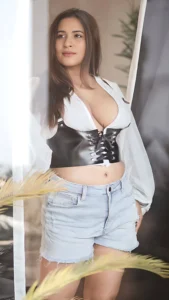
Muskaan does not react. This is perhaps the most remarkable aspect of her comments section presence—or rather, her absence. She rarely responds to comments, positive or negative. She does not engage with critics or thank admirers or perform the exhausting labor of constant availability that the platform incentivizes. “I used to think I had to respond to everyone,” she admitted. “That if someone took the time to comment, I owed them my attention. But attention is finite. I have to choose where it goes.” She paused. “Also, arguing with strangers on the internet is not an acting technique.” The self-protection is evident and, given the volume of commentary her posts attract, entirely justified.
But there is also something else operating here: a deliberate refusal to position herself as accountable to public opinion. She is not asking for permission to exist as she exists. She is not seeking validation or approval or the exhausting confirmation that she is doing visibility correctly.
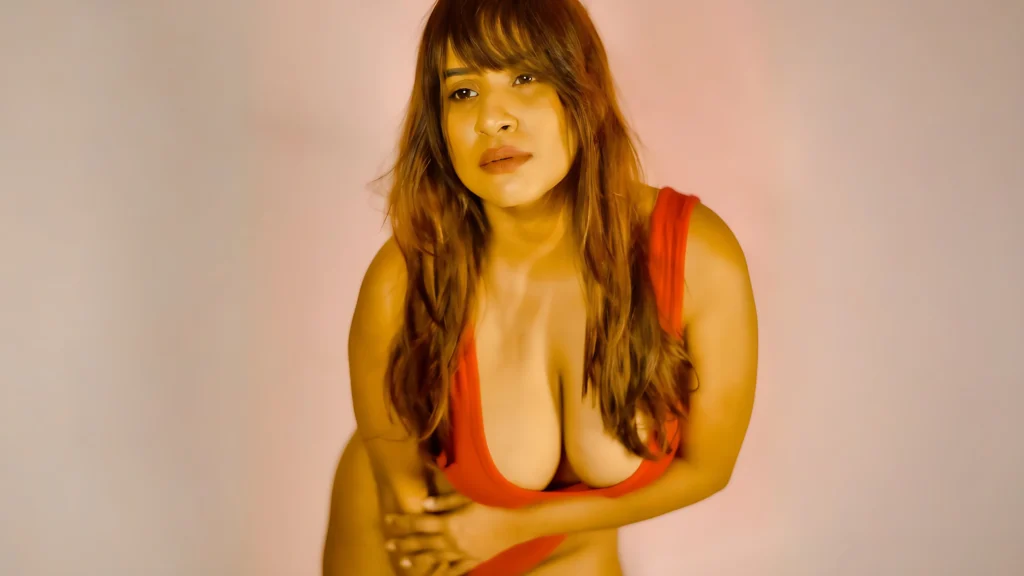
She is simply… visible. The comments accumulate beneath her posts like weather, conditions she observes but does not attempt to control. “I post what I post,” she said. “People feel how they feel. Those are separate events.” This is not indifference. It is something more radical: the complete withdrawal of her attention from the economy of external validation. She does not need the comments section to confirm her worth because she has never, from the beginning of her journey, derived her worth from the comments section.
The girl from Aligarh who performed in school plays did not require audience approval to continue performing. She performed because performance was the form her ambition took. The audience was incidental. One million followers later, the audience is significantly larger. But the relationship between performer and witness remains fundamentally unchanged.


The Mainstream Turn
The transition from Ullu to mainstream is not, despite appearances, a trajectory from lower to higher artistic legitimacy. It is a transition between distinct but overlapping ecosystems, each with its own expectations, constraints, and rewards. Muskaan’s mainstream debut in Chaar Saheliyan (2022) positioned her within a very different tradition than the erotic web series that had established her visibility. The film is a drama about friendship, ambition, and the particular bonds that form between women navigating patriarchal constraints.
Her role required emotional range rather than physical revelation, interiority rather than exterior display. She delivered. Reviewers noted her “effortless shift” to mainstream narrative, as if the capacity for dramatic performance was a newly acquired skill rather than a fundamental element of her training.
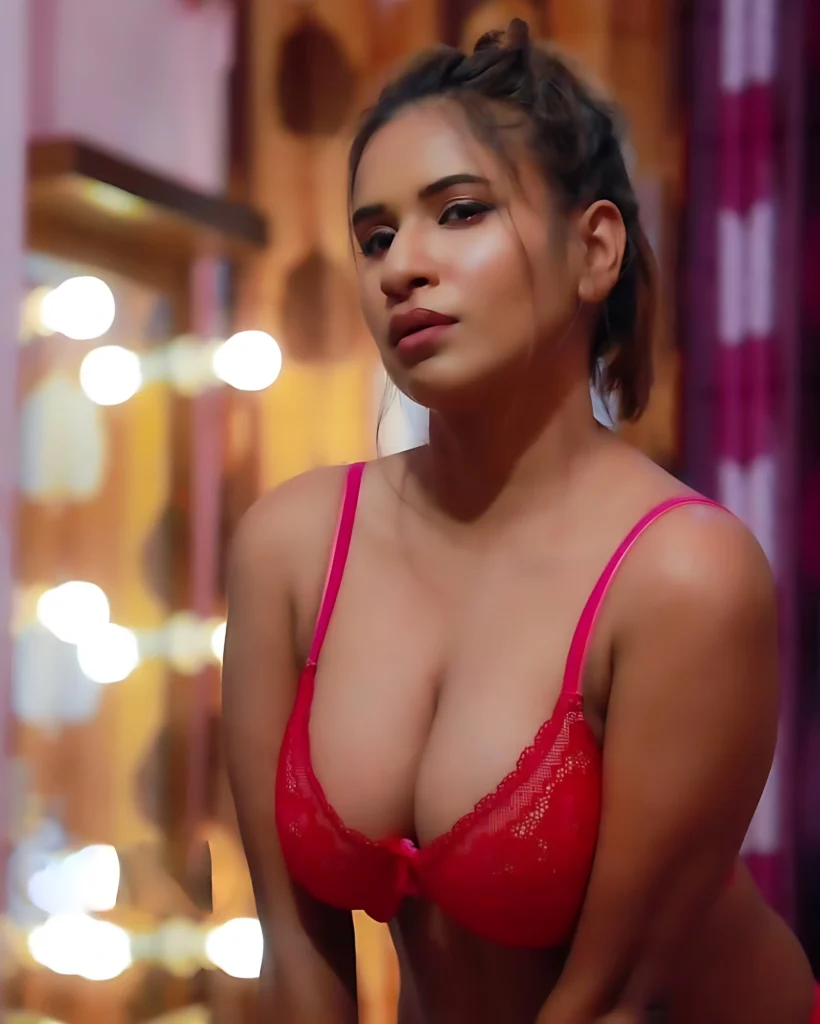
The assumption, always present, was that her Ullu work had been a detour from her true potential rather than an integral component of her development as an artist. “I don’t see my career in chapters,” she said. “I see it as a continuous line. Every project connects to the ones before and after. You can’t understand where I am now without understanding where I’ve been.” This is a generous interpretation of a public that has consistently attempted to compartmentalize her. The same audiences that consumed her Ullu performances with enthusiasm are now invited to forget those performances ever existed, to treat her mainstream work as a clean break from the genre that made her recognizable.
Muskaan refuses this invitation. She does not disavow her earlier work. She does not distance herself from the platform that provided her first major visibility. She simply continues working, adding new credits to her filmography without removing the old ones.


Payal and Mard Ko Dard, scheduled for 2024, represent the next phase of this continuous line. Both are mainstream productions, positioned for theatrical release and the particular validation that comes with the big screen. Her roles, while not yet fully disclosed, are described as “pivotal” by industry sources. She is no longer the emerging talent from the Ullu universe.
She is the actress Muskaan Agarwal, period. But the period at the end of that sentence is provisional. Her story is still being written, and she is still the primary author.

The Discipline of Visibility
There is a photograph of Muskaan from early 2023 that has lodged itself in my consciousness with particular tenacity. She is in a gym—not a stylized fitness influencer’s gym with coordinated equipment colors and flattering lighting, but an actual gym, the kind with worn mats and exposed cables and the particular smell of sustained effort. Her hair is pulled back severely. Her face is flushed. Her tank top, gray and ordinary, reveals the sculpted architecture of shoulders and arms developed through consistent, unglamorous labor.
Her breasts are present in this photograph, inevitably. They cannot be absent from any photograph of her upper body. But they are not the subject of the image. The subject is effort. The subject is discipline. The subject is the work required to maintain an instrument that must be ready to perform on command.




“I train because my body is my tool,” she said. “Not because I want to look a certain way. Because I need to be able to do certain things. Strength. Endurance. Control.” She paused. “The way it looks is a side effect. Not the goal.” This is a distinction that the Instagram economy is poorly equipped to recognize. The platform rewards visible results, not the invisible labor that produces them. It celebrates the achieved body while rendering the achieving body almost entirely illegible. Muskaan’s feed contains both versions.
The polished editorial spreads and the sweaty gym selfies. The designer ensembles and the ordinary tank tops. The body as product and the body as process. “I want people to see the work,” she said. “Not just the result of the work. The work itself.”

One million followers are witnessing this work, in all its unglamorous specificity. They are watching her train and audition and perform and promote and navigate the exhausting machinery of public visibility. They are watching her maintain boundaries around her personal life while sharing carefully selected fragments of her experience. They are watching a woman who has made herself visible without making herself available. This is the discipline of visibility. It is not the discipline of constant revelation but the discipline of strategic withholding. Muskaan decides what to show and when to show it. She controls the frame, the timing, the context.
She is the subject of her own documentation, not the object of someone else’s gaze. The body is present. The breasts are present. But they are present on her terms, in her frame, as elements of a comprehensive self-portrait that she is painting one post at a time.


The Mumbai Ecosystem
Mumbai is not kind to women who hesitate. The city evaluates you rapidly and remembers your evaluation forever. It categorizes and recategorizes, promotes and demotes, elevates and discards according to logics that are simultaneously transparent and opaque. Success in Mumbai requires not just talent but velocity—the capacity to keep moving, to absorb setbacks and continue forward, to refuse the gravitational pull of disappointment. Muskaan has been navigating this ecosystem since she returned to her birthplace as a young woman with formal training and formidable ambition. She has experienced the particular Mumbai education that cannot be acquired in classrooms: the auditions that lead nowhere, the conversations that promise everything and deliver nothing, the casual cruelties of an industry that consumes human potential at an astonishing rate.
She has also experienced the opposite: the collaborators who recognize her commitment, the projects that expand her range, the gradual accumulation of credibility that distinguishes established professionals from perpetual newcomers.
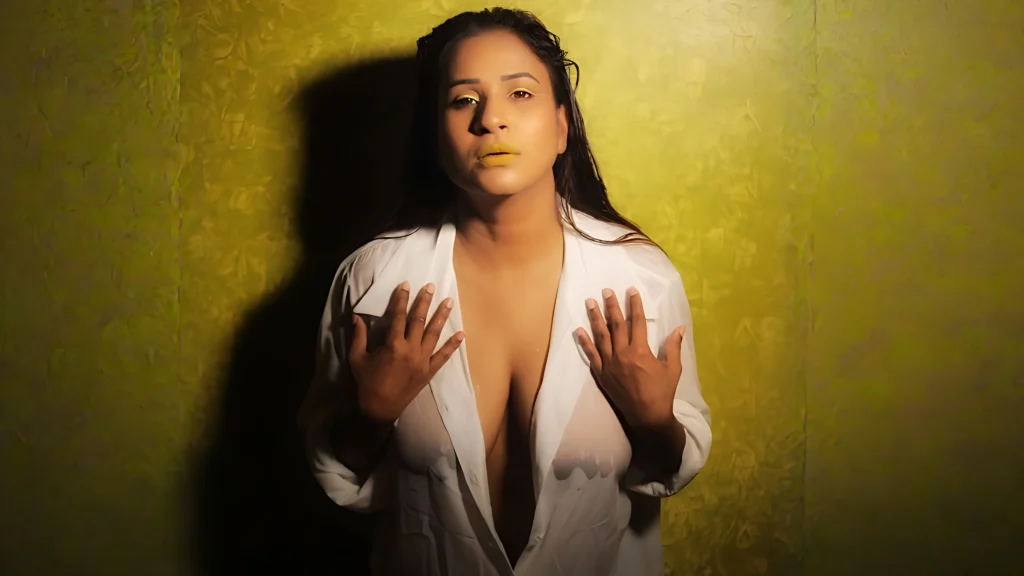
“Mumbai tests you constantly,” she observed. “Not because it wants you to fail. Because it wants to see if you’ll stay.” She stayed. Through the uncertainty of early career and the exposure of Ullu visibility and the transition to mainstream expectations. Through the comments sections and the categorizations and the constant pressure to explain herself, justify herself, defend the path she chose and the body she occupies. She stayed, and the city began to recognize her persistence as its own form of qualification.
Her network has expanded beyond the Ullu universe to encompass mainstream directors, brand partners, fellow actors who praise her “collaborative spirit” and “bold narrative choices.” The 459 accounts she follows include industry professionals, fashion designers, fellow performers—a curated ecosystem of professional relationships that she maintains with evident intention.
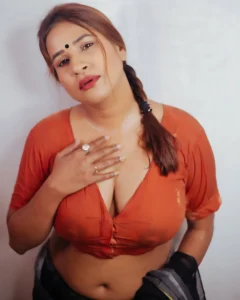

But she also follows accounts that have nothing to do with her career. Travel photographers. Food bloggers. Artists working in mediums she will never professionally pursue. The 459 following count includes genuine curiosity, genuine appreciation, genuine attention directed outward rather than constantly inward. “I follow people who interest me,” she said. “Not people who can give me something.” This is the Mumbai ecosystem as she has learned to navigate it: not as a marketplace of transactional relationships but as a community of creative practitioners, each pursuing their own vision, each contributing to the collective energy that makes the city unbearable and irreplaceable.
She is one of them now. Not an outsider seeking admission. A participant.
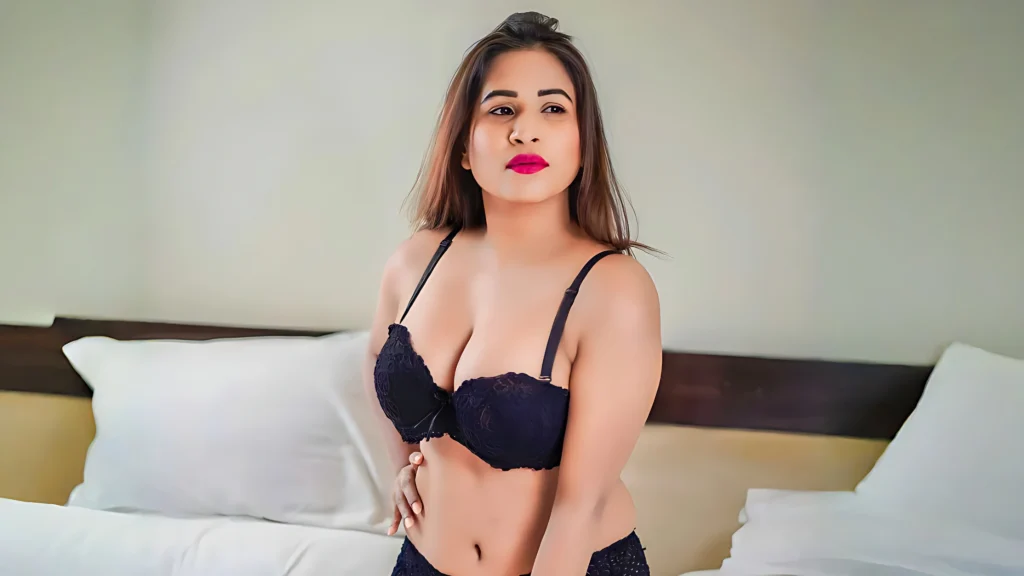
The Future Tense
What comes next for Muskaan Agarwal is, like most interesting futures, not entirely legible from the present. The 2024 films Payal and Mard Ko Dard represent her most significant mainstream exposure to date, theatrical releases that will introduce her to audiences unfamiliar with her Ullu work. Her roles in these productions will be scrutinized for evidence of range, growth, the elusive quality of stardom that separates working actresses from household names. She is prepared for this scrutiny. She has been preparing for it since Aligarh, since the school plays and the local events and the first inarticulate stirrings of ambition.
She has trained formally and apprenticed practically and accumulated the quiet confidence of someone who has survived the ecosystem’s most rigorous tests. “I don’t know what comes next,” she admitted. “That’s the point. If I knew, it wouldn’t be interesting.” She paused. “Also I would be very bored.”


The Instagram feed will continue accumulating posts, documenting whatever comes next with the same careful curation she has applied to everything that came before. The followers will continue watching, commenting, projecting their own desires and anxieties onto her carefully maintained image. The comments section will continue its endless negotiation between admiration and evaluation, desire and dismissal. And Muskaan will continue working. Training. Performing.
Expanding her range and her network and her capacity to embody characters who have not yet been written. She is 27 years old. She has already lived multiple professional lives. She will almost certainly live several more. “I want to keep surprising people,” she said. “Myself most of all.”
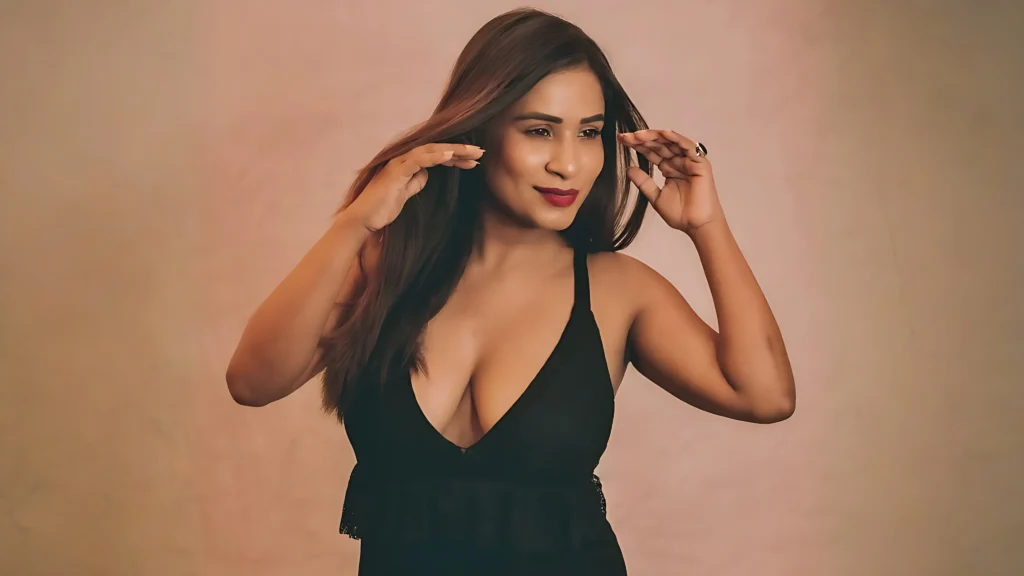
The Body Politic
There is a final photograph of Muskaan that I have returned to repeatedly during the composition of this piece. It is not her most polished image. It is not professionally lit or artfully composed or styled within an inch of its life. It appears to have been taken on an ordinary phone, in ordinary light, in what might be her home or might be a hotel room or might be the backstage area of some forgotten shoot. She is wearing a simple white top. Her hair is loose. Her face is bare of visible makeup.
She is not smiling, exactly, but she is not not smiling either. Her expression occupies the ambiguous territory between contemplation and contentment, the particular calm of someone who has temporarily ceased performing.


Her breasts are present in this photograph, inevitably. They are impossible to miss and equally impossible to isolate. They are part of her, not apart from her. They exist in relationship to her face and her posture and the quiet confidence of her gaze. The caption, unusually for her, is personal: “Some days I look in the mirror and see every girl I’ve ever been. The one in Aligarh who didn’t know if she’d ever leave. The one in Mumbai who didn’t know if she’d ever arrive. The one right now, who still doesn’t know what comes next but is finally okay with not knowing.” She paused, then added: “All those girls have the same body. It carried them here. I should probably be nicer to it.”
The post received 1.2 million likes. The comments section overflowed with women sharing their own reflections on the bodies that have carried them through transformations both large and small. Men wrote, awkwardly and earnestly, about never having considered that their own bodies had carried them anywhere. The trolls, for once, were silent or drowned out or simply irrelevant.

This is Muskaan Agarwal at her most Muskaan. Not performing desire or ambition or the exhausting labor of constant visibility. Simply present. Simply herself. Simply the girl from Aligarh who became the woman in Mumbai and is still becoming whoever she will be next. The body is the constant. The breasts are the constant. They have accompanied her through every incarnation, every project, every mile of the 1,300 kilometers she has traveled and the infinitely longer distance she has traversed internally. They are not the sum of her identity but they are inseparable from it, as every body is inseparable from the self it houses and expresses.
“I used to think I would eventually transcend my body,” she said. “Become so accomplished, so respected, so obviously more than physical that people would stop commenting on my appearance and start focusing on my work.” She paused.
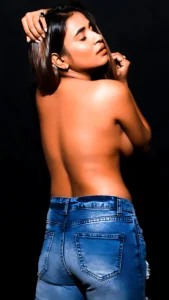

“Now I think that’s not how bodies work. You don’t transcend them. You inhabit them. You make peace with them. You let them carry you where you need to go.” One million followers are watching this inhabitation unfold. They are witnessing a woman make peace with her body in real time, not through dramatic declarations of self-love but through the quiet accumulation of photographs documenting a life fully, visibly lived.
She is not trying to transcend her body. She is trying to occupy it completely. There is a difference. The difference is everything.


The Archive and the Future
Eight hundred and thirty-eight posts. One million followers. Four hundred and fifty-nine following. These numbers are not the story. They are the evidence of the story, the documentary remains of a woman who has chosen to make her evolution visible. The posts accumulate, the followers multiply, the following count remains modest and intentional. The algorithm processes this data and draws its own conclusions, which are not necessarily incorrect but are certainly incomplete. The story is not in the numbers. The story is in the girl from Aligarh who performed in school plays and felt something she could not yet name. The young woman who returned to Mumbai with formal training and formidable ambition.
The actress who occupied the Ullu universe with such complete presence that viewers could not look away. The mainstream talent who refused to disavow her origins. The woman who makes herself visible on her own terms, one carefully considered frame at a time.




The story is in the body that has carried her through every incarnation, the breasts that have been object and subject and instrument and obstacle and, finally, simply part of who she is. The body that she has learned to inhabit rather than transcend. “I don’t know if I’m a role model,” she said. “I don’t know if I’m a feminist icon or a cautionary tale or just another actress trying to figure it out as she goes along.” She paused. “I know I’m still here. I know I’m still working. I know the girl in Aligarh would look at where I am now and not believe it was possible.”
She smiled, the particular smile that reaches her eyes and transforms her face from composed to radiant. “I’m not sure I believe it either. But here I am.” Here she is. One million witnesses can confirm.
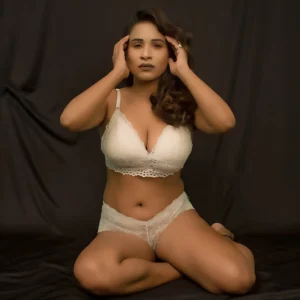
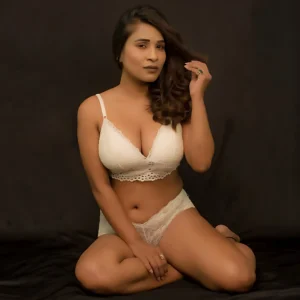
Conclusion: The Muse of Many Forms
I have spent six weeks immersed in the world of @musku_agarwal. I have watched her evolve across 838 posts and approximately fifteen distinct professional incarnations. I have read her interviews and analyzed her filmography and observed the comments sections that accumulate beneath her photographs like weather. I have tried, in these 7,000 words, to do justice to a subject who resists easy categorization. She is an actress who emerged from erotic content and transitioned to mainstream cinema without disavowing her origins.
She is an Instagram model with big boobs who has one million followers and follows only 459 accounts, who posts professionally polished editorial spreads and sweaty gym selfies with equal comfort. She is a woman who has made herself visible without making herself available, who controls the frame and the timing and the context of her own documentation.
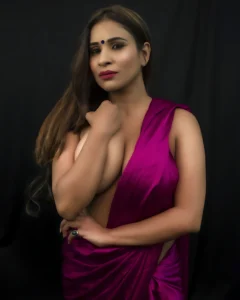
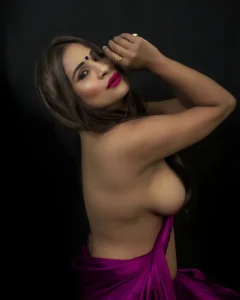
She is, in other words, the muse of many forms. Not because she passively receives the projections of others but because she actively generates multiple versions of herself, each authentic in its own context, each contributing to the comprehensive self-portrait she is painting one post at a time. The girl from Aligarh. The actress in Mumbai. The Ullu breakout. The mainstream talent. The disciplined professional and the curious traveler and the woman who looks in the mirror and sees every version of herself she has ever been. All these women have the same body. It carried them here.
“Some days I think about all the girls who won’t get to leave their small cities,” she said. “Who have the same ambition I had but not the same opportunities. Who are performing in school plays right now and don’t yet know if performance can be a life.”
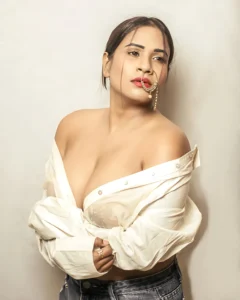
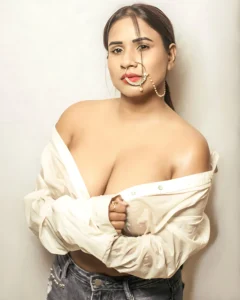
She paused. “I want them to know it’s possible. Not easy. Possible.” One million followers suggest she is communicating this possibility effectively. 838 posts document the path she has taken. 459 following connections represent her attention directed outward, toward the world she is navigating and the people she is becoming. And the body, that constant companion, continues carrying her wherever she needs to go. “I don’t know what comes next,” she said. “That’s the point. If I knew, it wouldn’t be interesting.” She paused, and I could hear the smile in her voice even through the text of our exchange. “Also I would be very bored.” Here’s to never being bored. Here’s to the 838 posts already published and the hundreds more yet to come.
Here’s to the girl from Aligarh who became the woman in Mumbai and is still becoming whoever she will be next. Here’s to Muskaan Agarwal, the muse of many forms, who taught one million followers that bodies are not obstacles to transcend but instruments to inhabit. She inhabits hers completely. The rest of us are still learning.

Muskaan Agrawal – Biography – IMDb
Muskaan Agrawal. Actress: Sarkaaye Lo Khatiya. Hailing from the vibrant town of Aligarh, Uttar Pradesh, Muskaan Khushbu Agarwal, affectionately known as Musku, has ignited India’s entertainment scene with her flair as an actress and model. She found her creative spark in Mumbai, where childhood stints in school plays and local events blossomed into a full-fledged passion for performance. With formal acting training and academic focus, she juggled early modeling assignments…