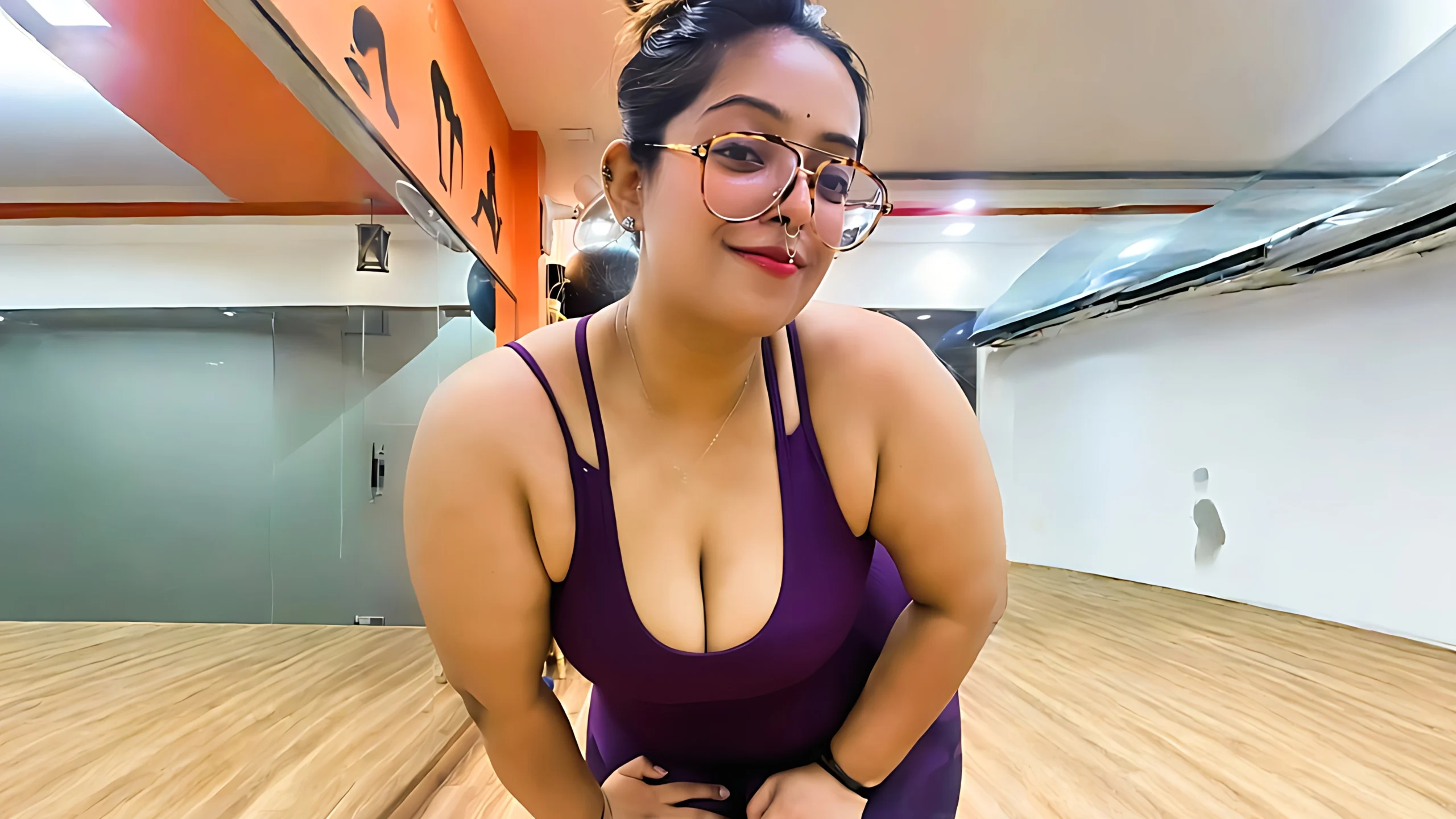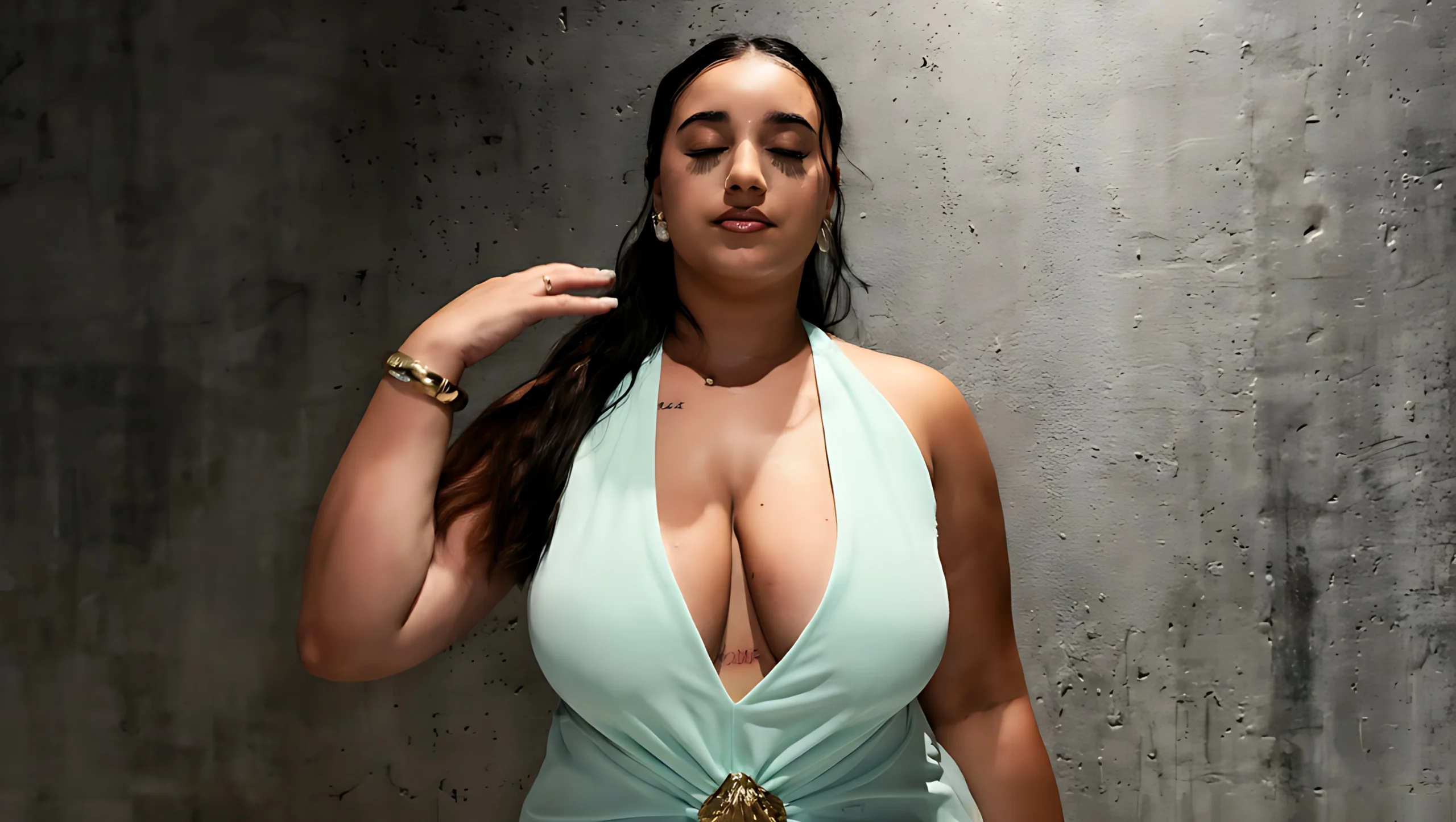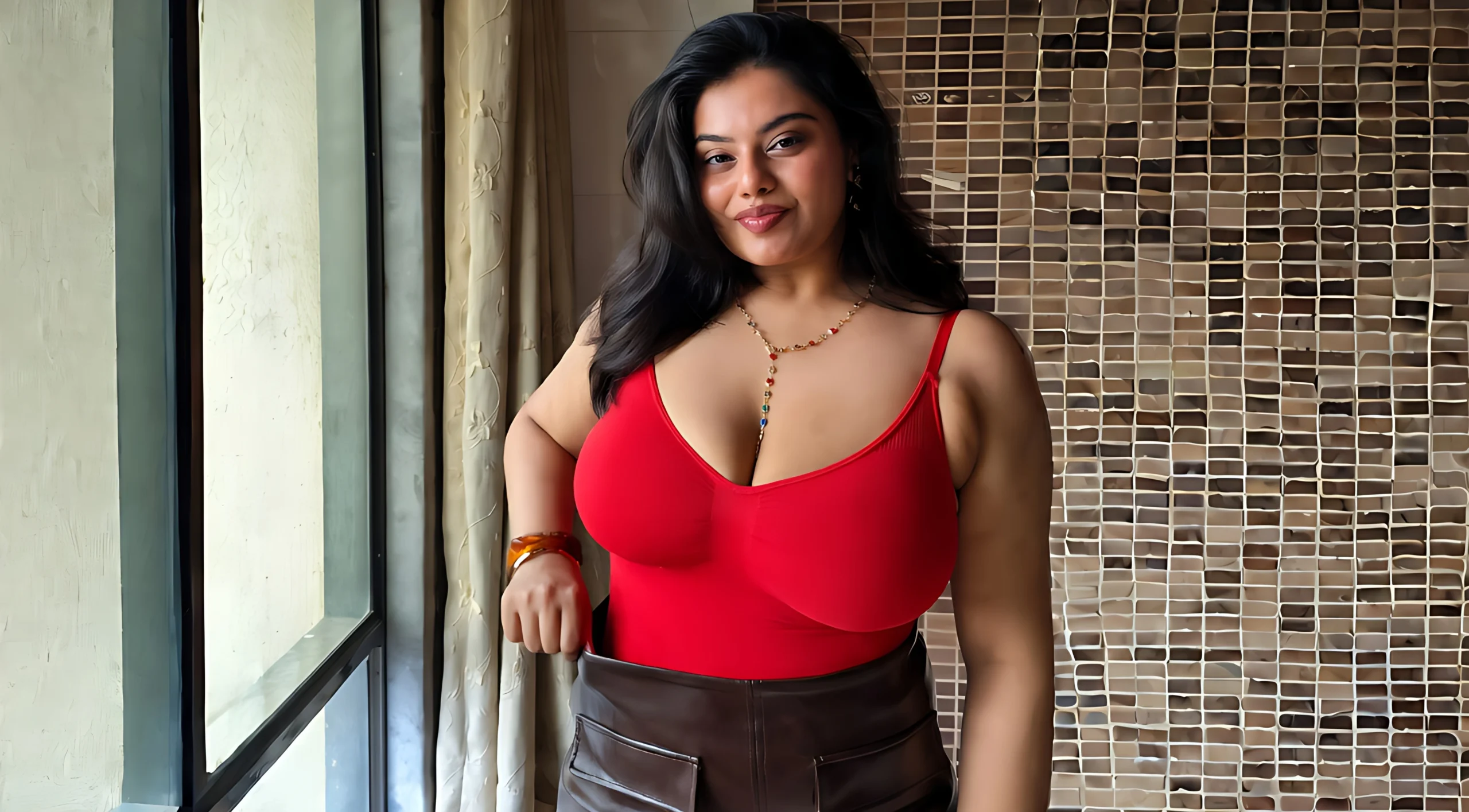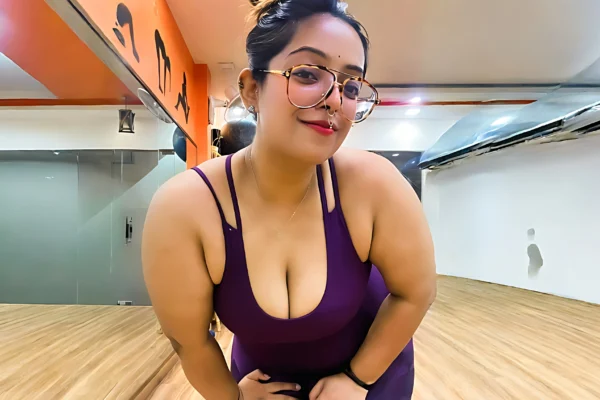
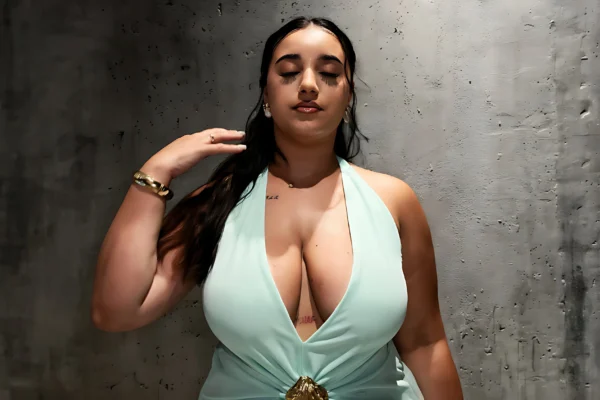
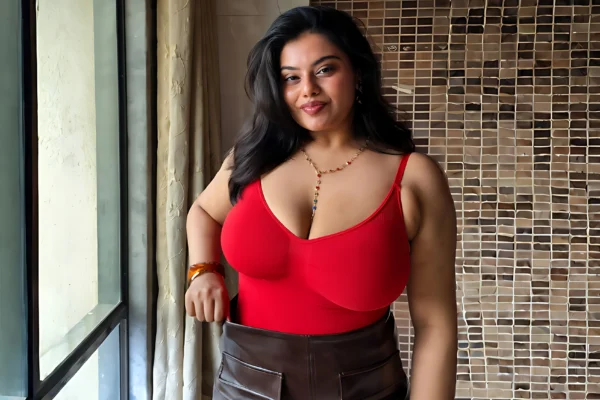
Ali Smiles builds a body positivity empire, One Breast at a Time
Ali Smiles transforms bold curves and genuine joy into a reciprocal body-positive empire built on visibility, vulnerability, and fearless self-acceptance.


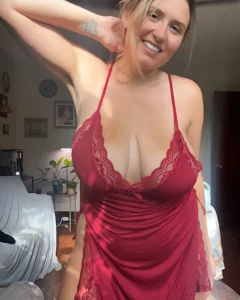
There is a photograph of Ali Smiles from March 2021 that I cannot stop thinking about. She’s standing in what appears to be a cramped bathroom—rental-grade counter, toothpaste residue in the sink, the kind of harsh overhead lighting that sends most influencers running for ring lights and golden hour. Her hair is pulled back messily. Her tank top is ordinary, white, slightly stretched at the neckline. She isn’t posing so much as occupying. And she is beaming. Not the careful, calculated smile of someone who has practiced in the mirror.
The real thing. The kind of smile that reaches the eyes and crinkles the nose and makes you involuntarily smile back at your phone like an absolute fool on public transportation. The caption read: “Caught myself actually feeling good today and had to document it for proof.
We exist. We always existed. We just forgot.” That post now has over 89,000 likes. The comments section contains approximately 4,000 variations of “thank you.” This is the world according to @alismilesco. Population: 410,000 followers, one woman with significant breasts and an even more significant mission, and 1,672 accounts she actively follows back—a number that has become something of a legend in the body positive Instagram ecosystem.
Because here’s the thing about Ali Smiles that makes her fundamentally different from every other Instagram model with big boobs you’ve ever encountered: She’s actually looking at you.
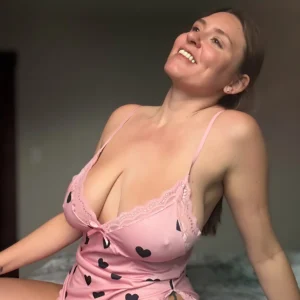
The Architecture of Reciprocity
Let’s begin with the number that matters: 1,672. In the attention economy of Instagram, following is supposed to be a liability. The algorithm rewards scarcity. You follow back strategically, if at all. You protect your feed from the clutter of ordinary people. You curate. You gatekeep. You maintain the sacred boundary between creator and consumer. Ali Smiles has followed 1,672 accounts. And not, as her detractors occasionally suggest, in some automated follow-for-follow scheme. Scroll through her following list and you’ll find no pattern—fitness enthusiasts and plus-size fashion bloggers, yes, but also a ceramicist from Portland, a grief counselor from Melbourne, a woman in Ohio who posts photos of her rescue greyhounds. Ordinary people. People who followed her first, left a comment, took a risk.
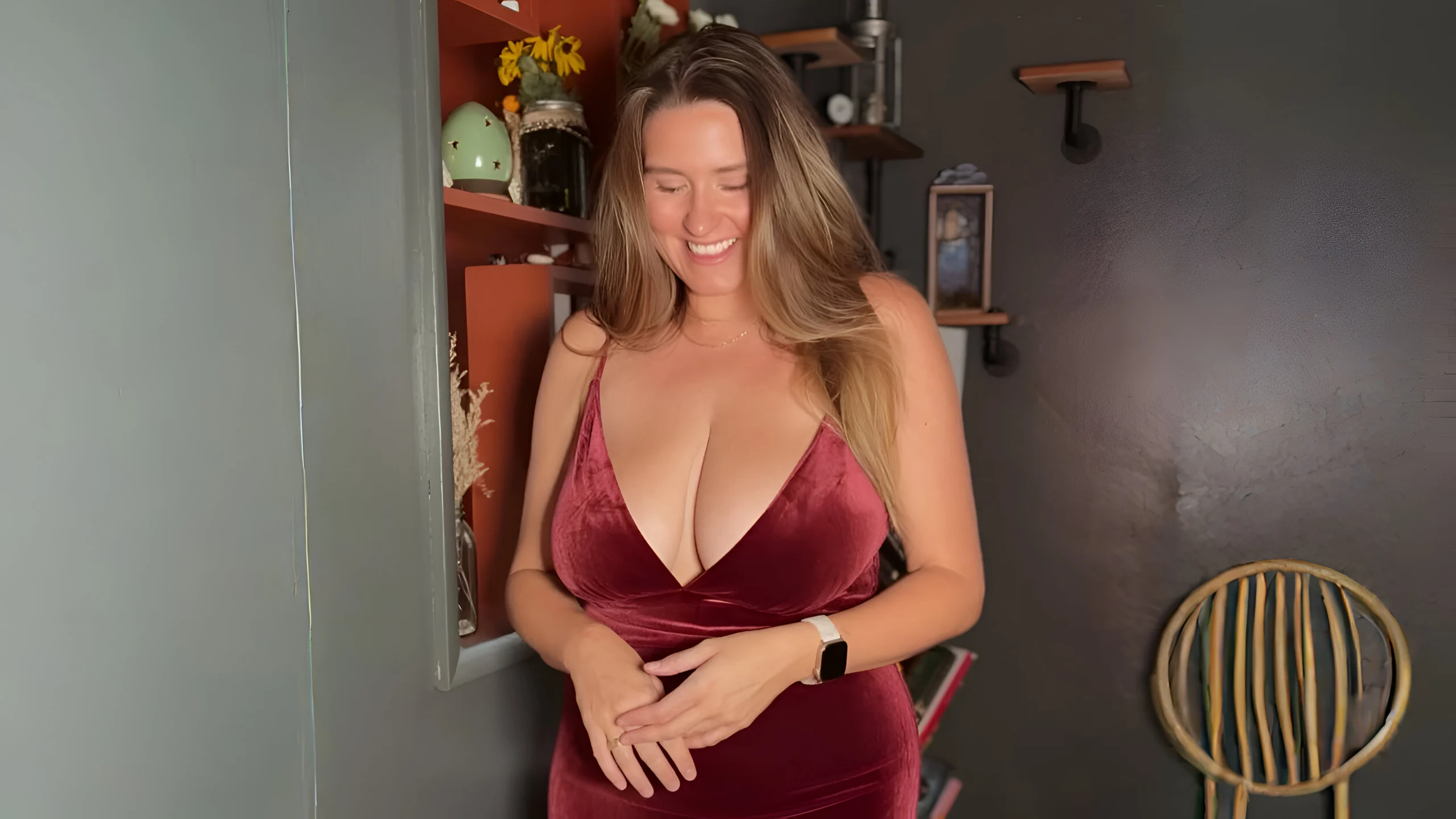
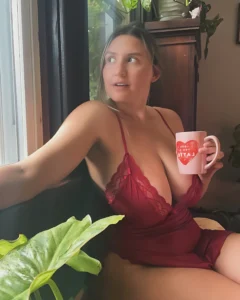
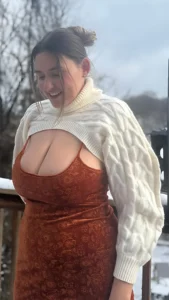
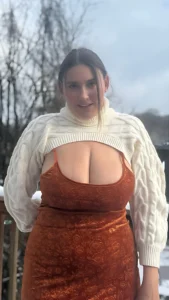
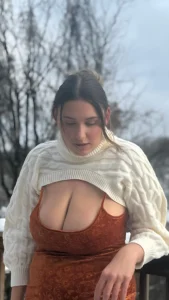
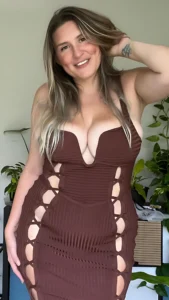
And she followed them back. “I remember when I hit 1,000 followers and thought it was the most people who would ever care what I had to say,” she wrote in a recent post, posed in a fitted burgundy dress that performed minor miracles of engineering. “Now there are 410,000 of you and I still can’t stop thinking about that first thousand. They taught me that showing up matters. I follow them because I haven’t forgotten.”

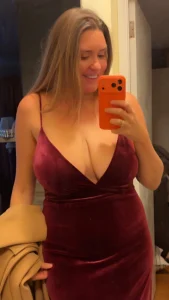
This is the foundational paradox of @alismilesco. She is simultaneously an Instagram model with big boobs—those breasts are undeniably, gloriously present—and a deliberate rejection of everything that archetype represents. She didn’t build a platform; she built a reciprocal space. Not a stage but a circle. Her followers notice. They always do. “I commented on her post six months ago about struggling with my body after having twins,” one woman shared. “She followed me back within an hour. Not because she wanted anything from me. She just wanted me to know I’d been seen.” Another: “I was going through my following list and realized Ali Smiles follows me. ALI SMILES. I screamed.
My husband thought someone died. I told him no, the opposite. Someone lived.” This is the currency Ali trades in. Not desire, not aspiration, not the distant admiration of an unattainable ideal. She offers something far more radical: presence. The willingness to actually look at the people looking at her. The audacity to treat followers as neighbors rather than metrics.
The Body Before the Brand
All of which brings us, inevitably, to the body itself. Ali Smiles possesses what the internet delicately terms “big boobs.” Not the surgically enhanced, gravity-defying architecture of mainstream adult entertainment. Not the carefully contained, push-up-enhanced abundance of fashion campaigns. Real breasts. Heavy breasts. Breasts with their own gravitational field and political implications and opinions about underwire. Breasts that exist, as she frequently documents, in permanent tension with a world that wants them to be either more or less than they are.
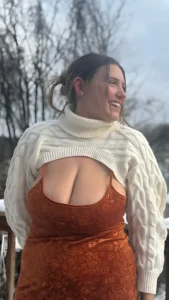
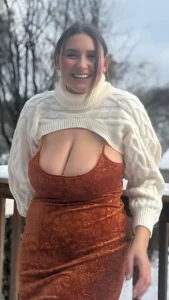
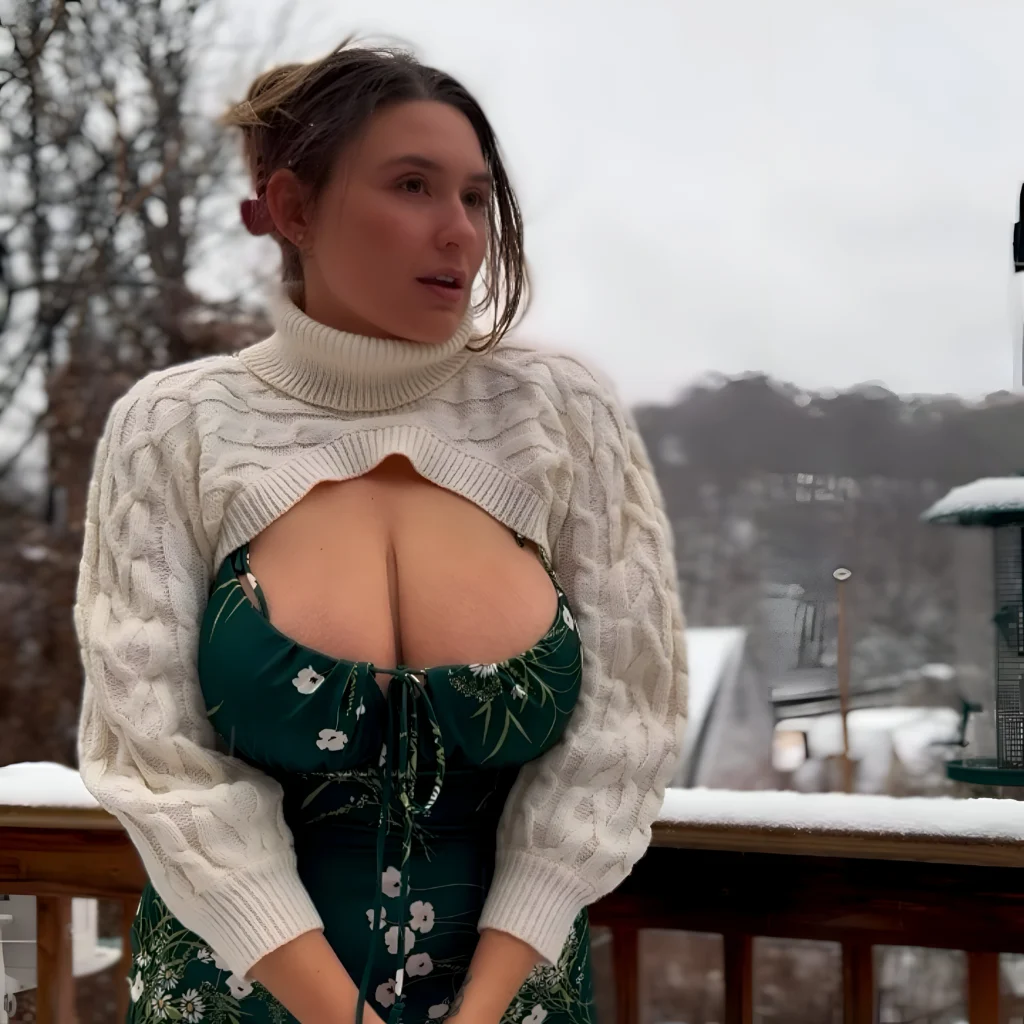
“I wore a turtleneck yesterday and someone commented that I was ‘hiding my assets,'” she wrote in January, alongside a photo that featured no visible cleavage whatsoever. “As if my body exists to be displayed for their approval. As if a turtleneck is hiding and not just… a turtleneck.” She paused, then added: “My breasts are not inventory.
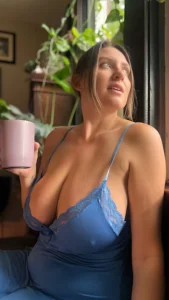

You don’t get to audit my availability.” The post received over 50,000 likes and launched approximately 12,000 conversations about the exhausting labor of public embodiment. Women shared stories of being told to cover up and being told to show more, often by the same people. Men—some, at least—confessed they’d never considered that constant evaluation might be exhausting. This is Ali’s particular genius. She doesn’t argue about her body. She doesn’t defend her choices or explain her existence or perform the endless labor of making herself legible to people who are determined to misunderstand.
She simply states—and the statement stands. “I used to think I needed to justify why I post what I post,” she reflected. “‘It’s empowering.’ ‘It’s for me.’ ‘It’s body positivity.’ But you don’t need a thesis statement to exist. You just need to exist.” So she does.
The Smile That Started It All
The origin story of @alismilesco is almost aggressively unglamorous. Before the 229 posts, before the 410,000 followers, before the 1,672 reciprocal follows and the brand partnerships and the feature in The BoobTalk Magazine (hello, mother), Ali was just a woman in a cubicle. Marketing coordinator at a mid-size firm. Good benefits, mediocre coffee, excellent health insurance that covered the annual mammograms her dense breast tissue necessitated. “I was good at my job,” she told me in a DM exchange last month. “I was just bad at being myself in it.”
The cubicle era photos—those few she’s preserved in archived highlights—show a woman in the process of erasure. Cardigans strategically draped. Blazers two sizes too large. The careful choreography of concealment that women with significant breasts master before they learn to drive. She was present but not visible.
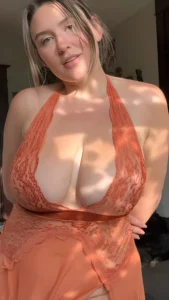
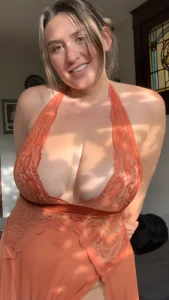
Occupying space without claiming it. “I thought if I made myself small enough, I’d be safe,” she wrote. “Safe from comments. Safe from evaluations. Safe from the endless calculation of whether I was too much or not enough.” Then, in March 2020, the cubicle disappeared. The office closed. Ali found herself alone in her apartment with a ring light she’d bought for Zoom meetings and a sudden, terrifying expanse of unstructured time. “I started taking photos because I was bored,” she admitted. “Then I kept taking photos because I was curious.
Then I posted one because I was lonely.” The first photo is still on her feed if you scroll far enough. March 17, 2020. A woman in a gray sweatshirt, hair in a messy bun, no makeup, standing in front of a window. She’s smiling—tentatively, experimentally, as if testing whether her face still remembered how.
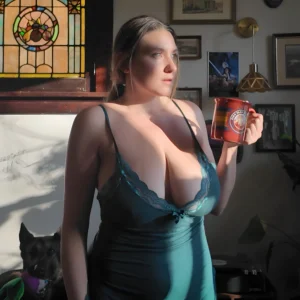
The caption: “Day 4 of isolation. My reflection and I are still getting reacquainted. She seems nice.” That post received 342 likes. It also received something else: dozens of comments from women who recognized themselves in that tentative smile. Women who had also been making themselves small. Women who had also forgotten what it felt like to occupy space without apology.
“I didn’t set out to start a movement,” Ali said. “I set out to stop disappearing. The movement was just… other people who were also tired of disappearing.”
The Algorithm Doesn’t Know What to Call Her
Here is the central tension of @alismilesco: she is impossible to categorize. The algorithm prefers clear taxonomies. Fashion influencer. Body positivity advocate. Plus-size model. Lifestyle creator. Each category comes with established behaviors, predictable engagement patterns, reliable monetization pathways. The machine rewards consistency. Ali Smiles keeps confusing the machine. One day she’s posting a mirror selfie in a corset top that leaves absolutely nothing to the imagination—the kind of post that sends screenshots flying through group chats and launches a thousand audacious DMs. The comments section floods with fire emojis and marriage proposals and the predictable litany of men who believe public existence constitutes personal invitation.
The next day she’s posting a photo of herself in an oversized sweater, no makeup, crying. Not the curated, aesthetically pleasing tears of performative vulnerability. Real crying. Puffy eyes, red nose, the particular blotchiness of genuine emotional release.
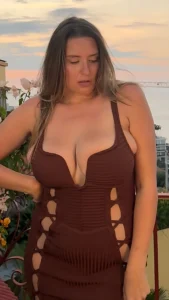
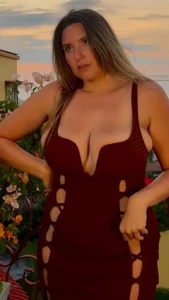
“Some days I look at my body and see a thousand criticisms,” she wrote. “Some days I look at my body and see a thousand women who wrote to tell me they’re learning to look at theirs differently. Both days are real. Both days are me.” The algorithm doesn’t know what to do with this. A body that is both desirable and desiring, both object and subject, both aspirational and attainable. The male gaze doesn’t know how to process a woman who is simultaneously aware of her visual impact and fundamentally uninterested in performing for it.
The female gaze doesn’t know how to process a body that represents both where you want to go and where you already are. Ali doesn’t resolve this tension. She simply occupies it. “I’m not one thing,” she wrote. “Neither are you. The algorithm can deal with its feelings about that on its own time.”

The Weight of Other People’s Expectations
There is a particular exhaustion that comes with having significant breasts in the public eye. It’s not just the physical reality—though Ali has documented that with characteristic candor. The shoulder grooves from bra straps. The specific challenge of finding a swimsuit that provides both support and style. The calculation required for staircases, hugs, leaning over to pick something up. It’s the symbolic weight. The way individual breasts become collective property, subject to endless interpretation and evaluation. The way every outfit becomes a statement you didn’t necessarily mean to make. The way your body becomes a Rorschach test for other people’s beliefs about modesty, sexuality, feminism, self-respect.
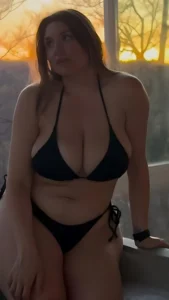
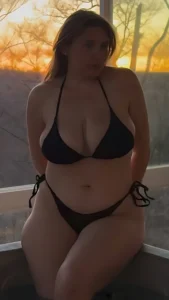
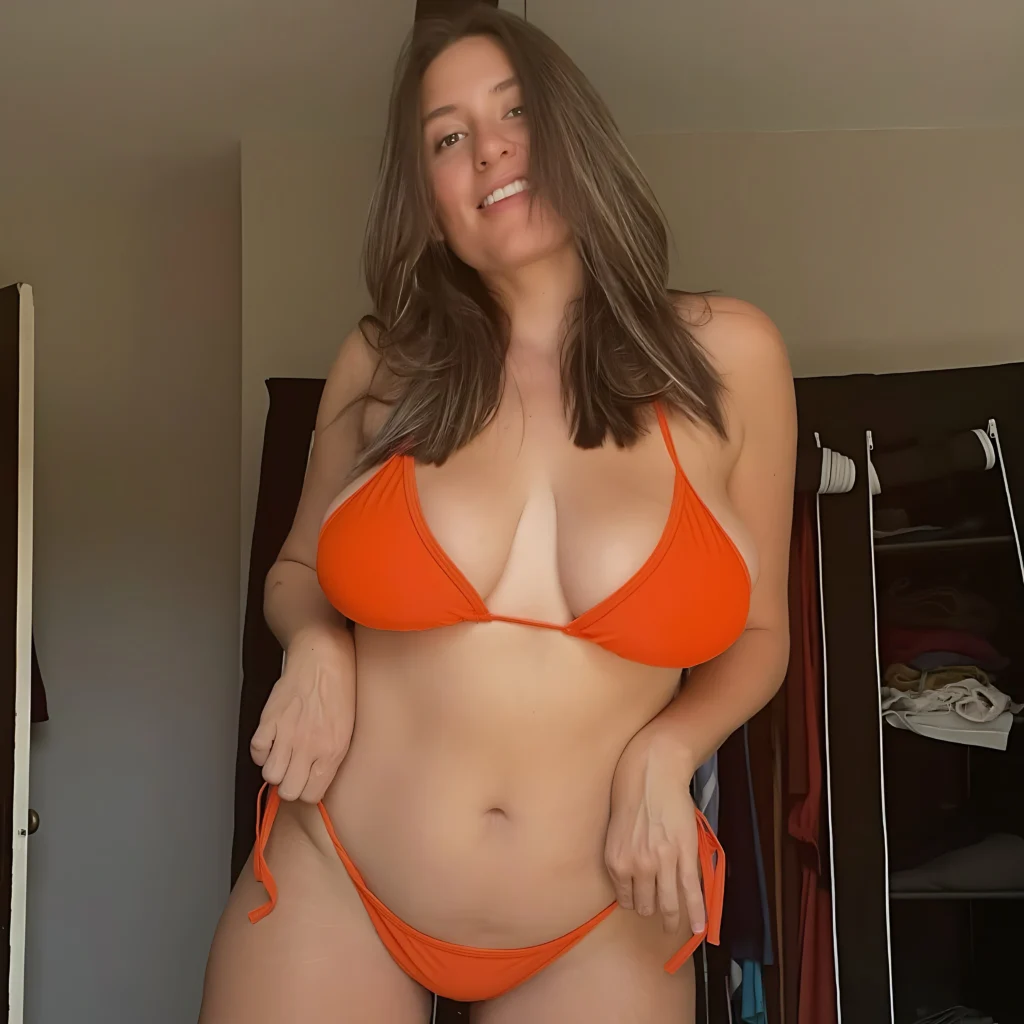
“I posted a photo in a bikini and someone commented that I was ‘setting women back,'” Ali recalled. “As if my vacation wardrobe has geopolitical implications. As if the fate of feminism rests on my underwire situation.” She paused, considering. “My bikini isn’t a manifesto. It’s just a bikini. I looked cute and I wanted to remember it.”
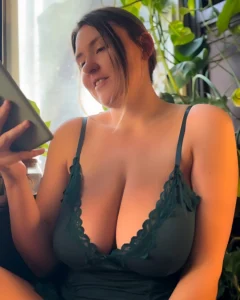
This, perhaps, is Ali’s most radical position: the insistence that her body can be both prominent and incidental. That breasts can be large without being meaningful. That a woman can be aware of her visual impact without making that impact her life’s work. “I don’t owe anyone a consistent philosophy of my chest,” she wrote. “Sometimes I show cleavage because I like the way it looks. Sometimes I wear a turtleneck because I’m cold. Neither is a political statement.
Both are just… clothing.” The commenters who demand consistency—who want her to be either always modest or always revealing, either serious advocate or carefree exhibitionist—miss the point entirely. Ali Smiles isn’t inconsistent. She’s complete. The full spectrum of human experience doesn’t fit into a single Instagram aesthetic, and she has stopped pretending otherwise.
The Community That Followed Her Back
The 1,672 following count has become something of a legend in the body positive community. Women share screenshots of Ali following them like others share engagement announcements. “She actually sees us,” one follower wrote. “Not in the abstract, influencer way. Actually sees us.” I asked Ali about this—about the deliberate, exhausting labor of reciprocal attention in an economy that rewards broadcast over connection. “It’s not exhausting,” she said. “It’s the whole point.” She explained: “When I was in that cubicle, making myself small, I used to follow influencers who seemed so far away. Untouchable. They existed in a different universe from my cramped apartment and my ordinary body and my life that never quite matched the aesthetic.
I admired them but I didn’t feel with them.” She paused. “I don’t want to be untouchable. I want to be touchable. I want people to know that there’s a person on the other side of this screen, and that person is looking back.”
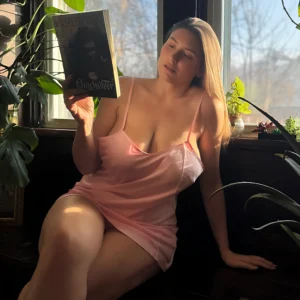
This philosophy extends beyond the follow button. Ali regularly hosts “comment parties”—designated hours when she responds to as many comments as physically possible, not with emoji or pre-written responses but with actual sentences, actual questions, actual presence. She features follower photos in her stories, not as “fan spotlights” but as genuine curations of bodies she finds beautiful. She remembers usernames, references previous conversations, follows threads across weeks and months. “I have a group chat with three other women I met through her page,” one follower told me. “We’ve never met in person but we send each other outfit photos before we post them.
‘Would Ali smile at this?’ is literally our metric.” What would Ali smile at? The question has become a quiet refrain across her comments section—not a plea for approval but an internal compass. Women navigating the treacherous waters of public embodiment, checking their orientation against a fixed star.
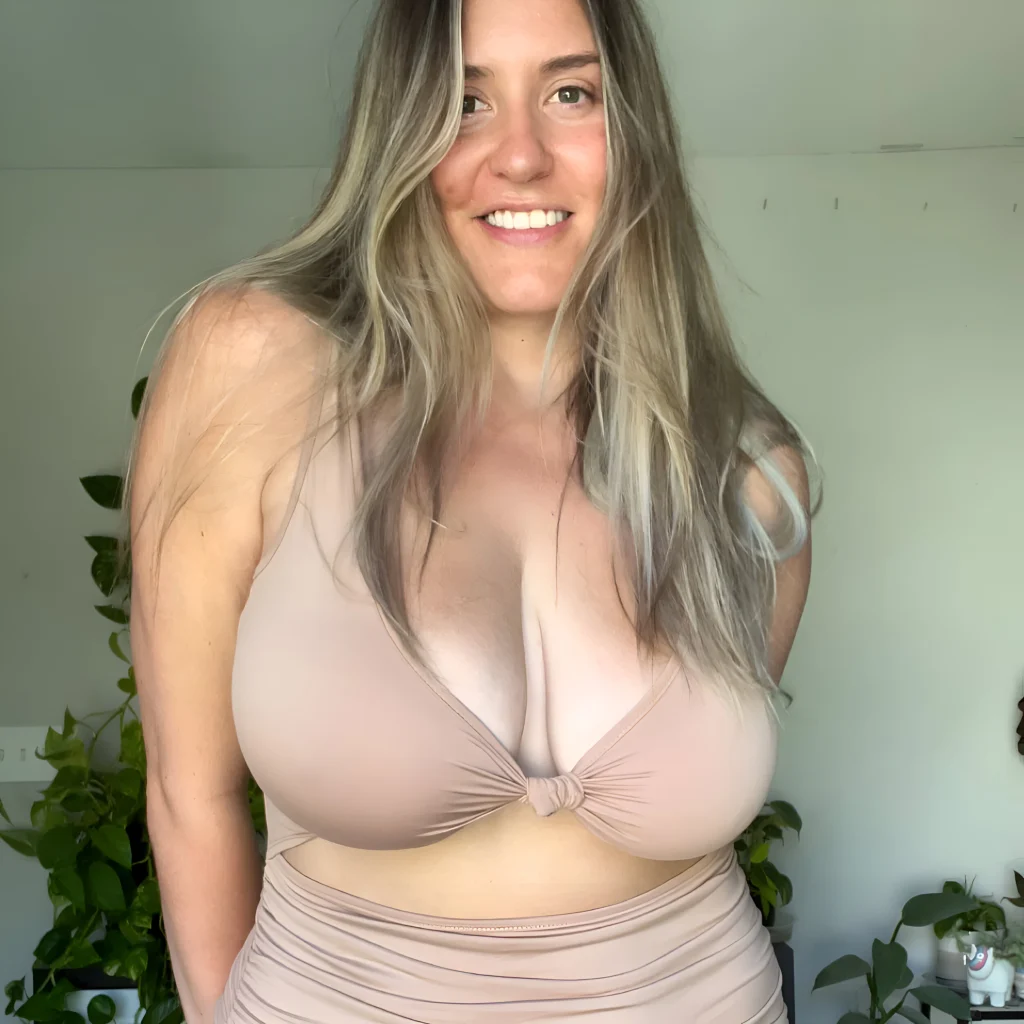
The Trolls and the Truth
Of course, 410,000 followers include 410,000 opinions, and not all of them are kind. Ali’s comments section is a fascinating sociological document. Scroll past the heartfelt confessions and the fire emojis and the women sharing their own journeys, and you’ll find the predictable litany: too much, too little, desperate, arrogant, seeking attention, denying attention, performing, authentic, fake, real, unreal. “You have big boobs and you show them because you want attention,” the comments read, in endless variations. “Yes,” Ali responded once, simply. “I want attention. I spent thirty years trying not to want it. Now I want it. What’s your point?”
The trolls, predictably, had no point. Or rather, they had a point they hadn’t thought through—the assumption that wanting attention is inherently shameful, particularly for women, particularly for women with bodies that attract it. Ali’s simple acknowledgment short-circuited the entire script. “Of course I want to be seen,” she wrote later. “Everyone wants to be seen. The difference is I stopped pretending I don’t. And somehow that’s the thing they can’t forgive.”
She doesn’t block the trolls. She doesn’t engage them, either, beyond occasional interventions like the one above. Instead, she leaves their comments visible, a quiet exhibit in the museum of other people’s limitations.
“I used to think if I was careful enough, specific enough, unobjectionable enough, I could avoid criticism,” she reflected. “But you can’t avoid criticism. You can only avoid living.”
The Body Positivity That Actually Works
There is a critique of mainstream body positivity that goes like this: it has been co-opted, commodified, stripped of its radical potential and repackaged as just another way to sell things. The movement that began as a call for liberation has become a marketplace, trading in the same insecurities it claimed to dismantle. Ali Smiles is aware of this critique. She lives inside it. “I don’t love my body every day,” she admitted in a recent post. “Some days I tolerate it. Some days I negotiate with it. Some days I wake up and the first thought in my head is the cruelest thing anyone ever said about bodies like mine, and I have to talk myself down from that ledge like it’s my job.”
She paused, considering the weight of her words. “Which it is, I guess. It’s my job. But also it’s just… life. Life in a body. Life in this particular body, which happens to be visible and commented-upon and impossible to hide.”
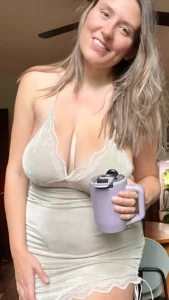
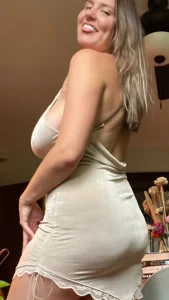
This, I think, is why @alismilesco has resonated so deeply with 410,000 followers. She doesn’t promise transformation. She doesn’t sell a ten-step program to unconditional self-love. She doesn’t claim to have transcended the cultural conditioning that tells women their bodies are problems to be solved.
She just… lives. Publicly. Messily. Unapologetically. “I don’t need to love my body every day,” she wrote. “I just need to stop making it apologize for existing.”
What the Smile Means Now
At 229 posts and counting, @alismilesco occupies a unique space in the body positive Instagram ecosystem. She’s too established to be emerging, too independent to be mainstream, too genuine to be commodified. The platform keeps trying to fit her into categories and she keeps refusing to stay contained. What comes next is anyone’s guess. More posts, certainly. More photos of that impossible smile, those undeniable breasts, that particular quality of presence that has made her one of the most unlikely success stories in the space.
More reciprocal follows, more comment parties, more women finding their way to each other through the unlikely medium of a woman who simply refused to disappear. But also, perhaps, something quieter. Something that doesn’t translate neatly into metrics. “I used to think my purpose was to help other women love their bodies,” Ali told me.
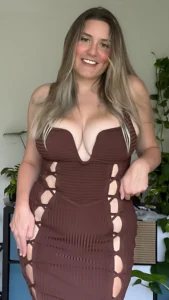
“Now I think my purpose is just to demonstrate that it’s possible to stop fighting. Not to win—to stop fighting. They’re different things.” She paused. “If other people find that useful, I’m glad. But I’m not doing it for them. I’m doing it because I got tired of being at war with my own reflection.”
The smile returns, that particular smile that has launched 410,000 variations of itself across countless screens and time zones. “And anyway,” she added, “I look really cute in this dress.”