







Paulina Gaitan: Hollywood Power Goes Beyond Big Boobs
Paulina Gaitan turns raw intensity into real artistry — proving Hollywood’s intrigue isn’t her big boobs, but her bold talent and fearless storytelling.

Let’s just cut to the chase. You’re probably here because you typed “Paulina Gaitan nude” into a search bar. The algorithm, in its infinite wisdom, delivered you to this very page. And hey, no judgment. We’re all human. The curated stills and breathless descriptions of her scenes in The Dead Girls or Diablo Guardian promise a certain kind of thrill—the kind that gets the pulse racing, as they say. They promise a focus on Paulina Gaitan’s breasts, her body, the raw mechanics of on-screen sex.
But what if I told you that by fixating solely on that, you’re missing the entire point? What if the real story isn’t in the nudity itself, but in the fearless artistry of a Mexican actress carving her own path in a industry that’s often quick to pigeonhole?
Stick with me. We’re about to dive deep into the phenomenon of Paulina Gaitan, moving beyond the clickbait to explore the talent, grit, and narrative power that makes her one of the most compelling figures to watch in Hollywood and beyond.
This isn’t just another listicle; it’s a re-framing.

The Scene Everyone’s Talking About: Deconstructing “The Dead Girls”
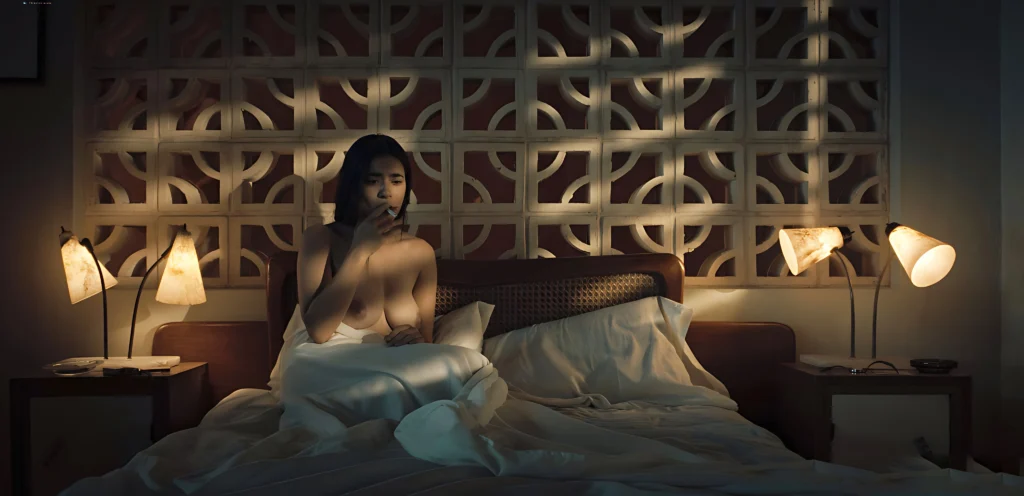
Okay, fine. Let’s address the elephant in the room. The scene from The Dead Girls (Las Niñas Bien). The one described with such… enthusiastic vocabulary. The description paints a picture of a feral, impulsive encounter: a dropped towel, an “insatiable” woman, a man who “pounces,” and the rhythmic movement of “Paulina Gaitan’s juicy boobs” during the act. It’s easy to view this through a purely prurient lens. But let’s put on our critical thinking hats for a sec. The film itself, directed by Alejandra Márquez Abella, is a sharp, satirical take on the Mexican upper class during the 1982 economic crisis. It’s about privilege, decay, and the desperate performance of normalcy when your world is collapsing. So, what is the narrative purpose of that scene?
It’s not just “sex.” It’s a manifestation of rebellion, of animalistic release from the suffocating constraints of high society. Gaitan’s character, Sofia, isn’t just having sex; she’s engaging in an act of visceral, almost destructive, authenticity. The nudity isn’t gratuitous; it’s a stripping away of the designer labels and social pretenses.
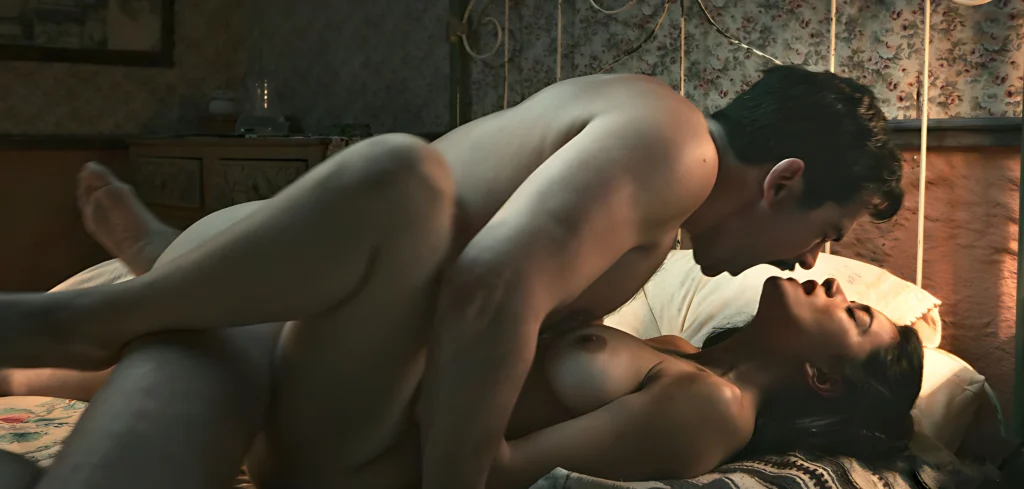
The raw, un-styled nature of it—the so-called “hairy pussy”—is a direct middle finger to the polished, waxed, and perfected existence she is supposed to lead. When we reduce this moment to just “Paulina Gaitan frontal nude,” we do a disservice to the story and the performance. Gaitan isn’t just a body in the frame; she’s an actress using her physicality to convey a complex cocktail of boredom, desperation, and raw human need.
The power of the scene lies in her commitment to that unsettling emotional truth, not just in the fact that she isn’t wearing clothes.

A Different Kind of Nude: The Sensory World of “Diablo Guardian”
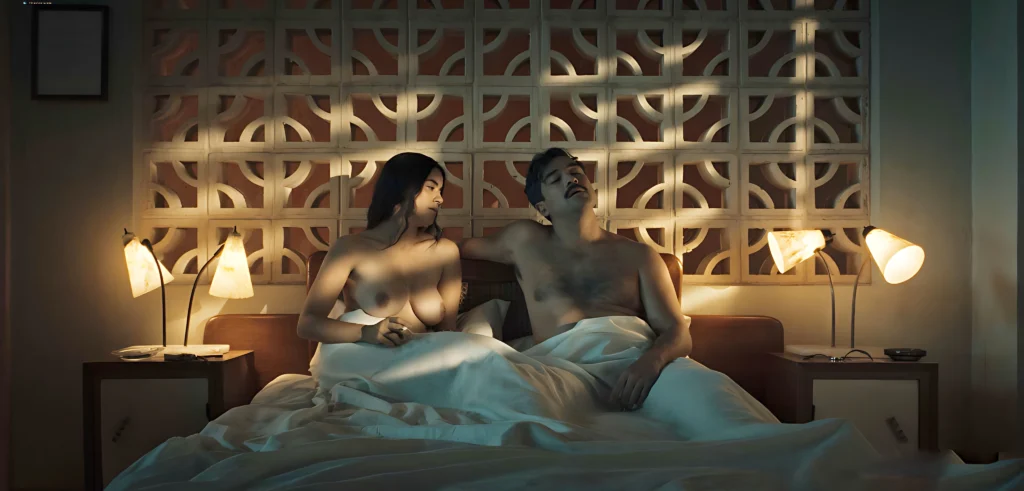
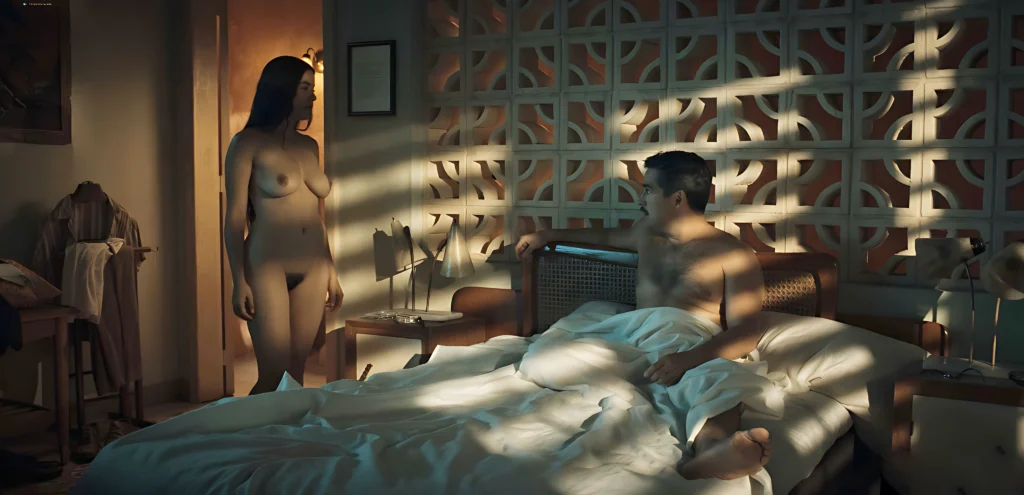
The same depth applies to the much-discussed scenes in Diablo Guardian (2019). Again, the surface-level description focuses on the physical: “huge tits with brown big nipples,” “revealing outfits,” and “sex with her lovers in different places.” But Diablo Guardian is a wild, chaotic, and surreal ride based on the novel by Xavier Velasco. It’s a story about a dysfunctional, quasi-incestuous relationship between a troubled man and a volatile young woman. The sexuality in the show is intense, pervasive, and integral to the plot. It’s meant to be uncomfortable, alluring, and confusing—much like the relationship at its core.
Paulina Gaitan’s character, Violetta, is a force of nature. Her body is her instrument of power, manipulation, and self-destruction. The bath scene, where she “shows off her huge tits,” isn’t a simple display for the male gaze. In context, it’s a moment of sensory exploration and control.

The water, the touch, the display—it’s about her ownership of her own sensuality in a world that seeks to define it for her. The “revealing outfits” aren’t just for show; they are Violetta’s armor and her weapon. They are a deliberate performance of sexuality designed to provoke, entice, and destabilize those around her. When we see her having sex in various locations, it’s not a checklist of erotic positions; it’s a portrayal of a character who uses physical intimacy as a language, however fractured that language may be. By focusing only on the size of her breasts or the explicitness of the act, we miss the point of Gaitan’s performance entirely.
She embodies Violetta’s chaotic energy with a terrifying and mesmerizing commitment. She makes you feel the character’s pain, her manipulation, and her fractured humanity through these very acts. That’s not just acting; that’s artistic courage.
The Anatomy of a Keyword: Why We’re Obsessed with “Big Boobs”
Let’s get meta for a paragraph. Why are keywords like “big boobs” and “boobs” such a driving force in internet searches related to actresses? It’s the digital-age version of an ancient, often reductive, fascination. Hollywood and global cinema have a long, complicated history of commodifying the female body, and the internet has simply hyper-charged this process.
The search for “Paulina Gaitan big boobs” is a symptom of a culture that often values women for their physical attributes above their intellectual or artistic contributions. It’s a lazy shorthand. But as an audience, we have a choice. We can consume media on that superficial level, or we can choose to look deeper.

Paulina Gaitan, like many talented actresses, possesses a physicality that is a part of her toolset. Her curves, her presence, her expressive face—they all contribute to her characters. To isolate one aspect is to misunderstand the whole. It’s like praising a master chef only for the salt they use.
Sure, it’s an ingredient, but it’s the symphony of flavors that creates the masterpiece.
From “Narcos” to Now: The Trajectory of a Serious Actress
If you only know Paulina Gaitan from these steamy scenes, you’re missing a huge part of her story. Her career is a testament to her range and ambition. Many international audiences first took notice of her in the blockbuster Netflix series Narcos. She played the young version of Tata, the wife of Pablo Escobar. It was a role that required her to project innocence, resilience, and a growing understanding of the brutal world she had married into. There was no explicit nudity here, just raw, powerful acting that held its own against heavyweights like Wagner Moura.
Before that, she was critically acclaimed for her role in Sin Nombre, a harrowing and beautiful film about Central American migrants traveling to the U.S. Her performance was grounded, vulnerable, and heartbreaking. It announced her not as a sex symbol, but as a formidable dramatic actress.
This is the crucial context. The roles in The Dead Girls and Diablo Guardian are not the acts of someone with no other options. They are deliberate choices by an established, respected Mexican actress who is unafraid of complex, challenging, and physically demanding material.
She selects roles that are messy, morally ambiguous, and artistically rich. The nudity and sexuality are often a byproduct of that commitment to truth-telling, not the goal.
Mexican Actresses Breaking Barriers in Hollywood
Paulina Gaitan’s career path is part of a larger, exciting movement. We are living in a time where Mexican actress talents are no longer confined to stereotypical roles in Hollywood. They are leading action franchises, winning Oscars, and creating their own content. Think of the fierce intensity of Eiza González. The chameleon-like transformations of Salma Hayek, who has evolved from a sex symbol to a powerful producer and director. The dramatic depth of Marina de Tavira. These women, Gaitan included, are shattering the glass ceiling and demanding that the industry see them as full, complete artists. They are bringing their unique perspectives, their cultural heritage, and their immense talent to the global stage.
They are telling stories that are specifically Mexican and universally human. When Paulina Gaitan takes on a role that involves nudity, it’s from a place of power and choice—a far cry from the exploitative systems of old Hollywood. She is an author of her own image.
So, What Are We Really Looking At?
When you watch that scene in The Dead Girls, what do you see now? Do you just see a naked woman, or do you see an actress portraying a character’s frantic escape from her gilded cage? When you see the bath scene in Diablo Guardian, is it just about boobs, or is it about a character trying to feel something, anything, in a world of emotional numbness?
The initial search that might have brought you here—the one focused on “Paulina Gaitan nude,” on her body, on her breasts—is a starting point. It’s a testament to her captivating screen presence. But the real journey is what happens after the initial click.
The real story is about Paulina Gaitan, the artist: a fearless, talented, and intelligent Mexican actress who is making waves on her own terms. She uses her entire being—her voice, her eyes, her mind, and yes, her body—to tell stories that are complicated, provocative, and deeply human. So next time her name pops up, maybe the first thing that comes to mind won’t be a keyword.
Maybe it’ll be the memory of a powerful performance that stayed with you long after the credits rolled. And that, honestly, is so much hotter.